Overview of Diabetic Foot Ulcer
A diabetic foot ulcer is an open sore that appears on the foot or toe in Individuals with metabolic conditions. It usually happens because blood flow is poor, the nerves are damaged, or wounds heal slowly. Many ulcers start small, but they can become serious if treatment is delayed.
What Is a Diabetic Foot Ulcer?
A diabetic foot ulcer is a wound that does not heal normally. It often appears on the bottom of the foot, heel, toes, or sides of the foot.
Because diabetes can reduce feeling in the feet, many people do not feel pain. As a result, the ulcer may go unnoticed until it becomes worse.
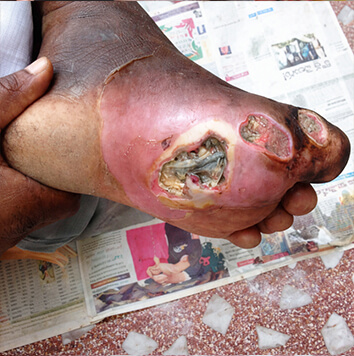
What Do Foot Ulcers Look Like?
Foot and toe ulcers may look like:
- An open wound or sore
- Red, pale, dark, or black skin around the area
- Swelling or redness
- Fluid or pus coming from the wound
- Thick or hard skin (callus) around the sore
Pain may be little or not present at all..
How Big Are Foot Ulcers?
Doctors use grades to describe how serious the ulcer is.
Grade 0
No open wound yet, but signs like thick skin, redness, cracks, or pressure areas are present. This means there is a high chance of an ulcer forming.
Grade 1
A small and shallow wound on the surface of the skin.
Grade 2
A deeper wound that reaches the skin and soft tissue.
Grade 3
A deep wound affecting muscles or deeper parts of the foot.
Grade 4
Severe tissue damage with infection in one part of the foot or toe.
Grade 5
Very serious damage affecting a large area of the foot and Requires timely medical attention.
Complications of Diabetic Foot Ulcer
If not treated early, diabetic foot ulcers can cause:
Infection spreading deeper
Early treatment greatly reduces these risks.
How to Prevent Diabetic Foot Ulcer
Doctors advise for prevention of diabetic foot ulcer:
Washing and drying feet well
Wearing comfortable shoes
Keeping blood sugar under control
Avoiding walking barefoot
Seeing a doctor early for any cut or redness
How Diabetic Foot Ulcer Is Diagnosed
Doctors may:
Check blood flow and nerve feeling
Order blood tests if infection is suspected
Use scans if deeper damage is suspected
Early diagnosis helps wounds heal better
Diabetic Foot Ulcer Treatment Options
- Special wound dressings
- Treating infection
- Reducing pressure on the foot
- Improving blood flow
- Regular check-ups and follow-up care
Personalized treatment helps protect healthy tissue and improves healing.
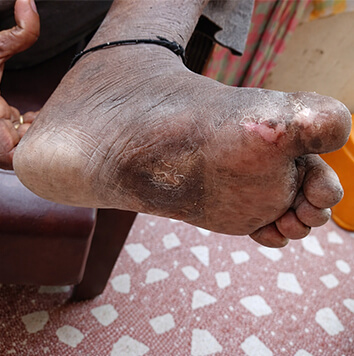
Before & After Treatment
Individual results may vary. Actual patient photos available during consultation.