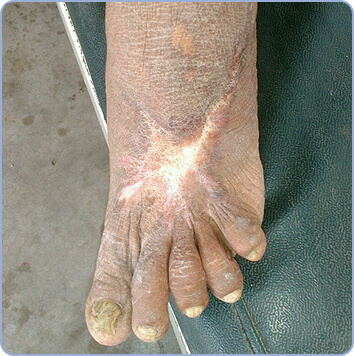
Overview of Gangrene
Gangrene is a serious medical condition that develops when body tissues do not receive enough oxygen and nutrients due to poor blood circulation or severe infection. This condition may occur suddenly after an injury or develop gradually due to long-term health problems such as diabetes and vascular disease.
Clinical experience shows that early diagnosis and specialized gangrene care play a critical role in protecting healthy tissue, controlling infection, and improving recovery outcomes.
✔ Key Facts
- Most commonly affects extremities
- Early treatment improves outcomes
- Can develop suddenly or gradually
- Requires immediate medical attention
What Is Gangrene?
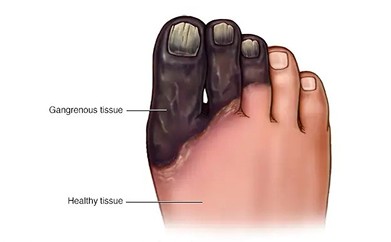
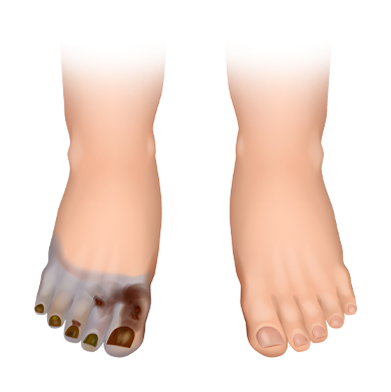
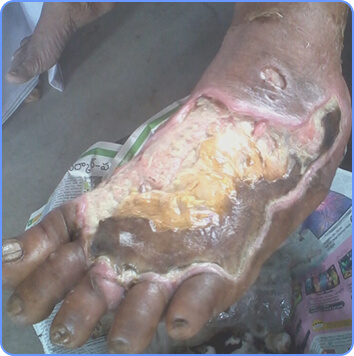
Gangrene occurs when body tissue dies because of a lack of blood supply, infection, or both. It most commonly affects the feet, toes, fingers, hands, and legs, but it can also develop internally.
Without timely medical care, gangrene can spread quickly and lead to serious and May lead to serious medical complications. Early medical attention significantly improves treatment success.
Commonly Affected Areas
- Feet and toes
- Fingers and hands
- Legs and arms
- Internal organs (in severe cases)
⚠️
Warning
Gangrene is a medical emergency. If you notice any signs of tissue death, seek immediate
medical attention to prevent serious complications.
Symptoms of Gangrene
Early symptoms of gangrene may be mild but can worsen rapidly.
Common Signs and Symptoms
Skin Color Changes
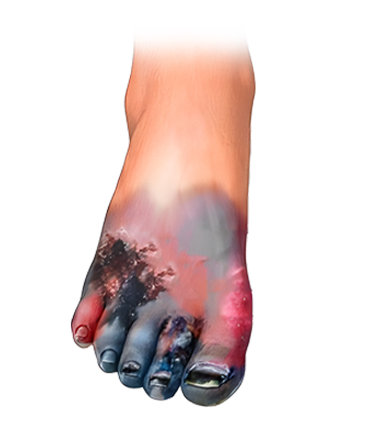
pale, blue, purple, or black
Coldness or Numbness
Affected area feels cold and loses sensation
Sudden or Persistent Pain
Sharp pain or sudden numbness
Swelling or fluid-filled blisters
Fluid-filled blisters and tissue swelling
Foul-smelling discharge from wounds
Unpleasant odor from affected tissue
Fever or general weaknes
Elevated temperature and general fatigue
If you notice any combination of these symptoms, especially skin discoloration with pain or numbness,
seek emergency medical care immediately.
Causes & Risk Factors
- Poor blood circulation
- Severe or untreated infections
- Long‑standing or non‑healing wounds
- Physical trauma or injury
If you have any of these risk factors, regular check‑ups and proper wound care are essential for prevention
Possible Complications of Gangrene
If gangrene is not treated promptly, it may result in:
Spread of infection throughout the body
Life-Threatening Conditions
Who Is Most Affected by Gangrene?
Gangrene commonly affects:
Individuals with metabolic conditions
Patients with circulation disorders
Individuals with chronic or non-healing wounds
People with weakened immunity
How to Prevent Gangrene
Medical experts emphasize that gangrene can often be prevented by:
Proper cleaning and care of wounds
Regular foot and skin examinations
Maintaining healthy blood sugar levels
Seeking early medical care for slow-healing wounds
Additional Prevention Strategies
Regular Check-ups
Schedule medical examinations
Proper Footwear
Wear protective shoes
Temperature Care
Protect from extreme temps
How Gangrene Is Diagnosed
Gangrene diagnosis involves:
Physical examination by experienced medical professionals
Blood tests to identify infection
Imaging tests such as X-ray, CT scan, or MRI
Wound or tissue cultures in infected cases
Gangrene Treatment Options
Gangrene treatment depends on the type and severity of the condition. Care plans are customized and may include:
Improving blood circulation to affected areas
Vascular procedures and medications to restore blood flow
Advanced Wound Care Therapies
Specialized dressings and hyperbaric oxygen treatment
Infection control and medical management
Targeted antibiotic therapy and infection management
Removal of dead tissue when necessary
Surgical debridement to prevent infection spread
Ongoing monitoring and supportive care
Regular assessments and long-term follow-up care
Before & After Treatment
Individual results may vary. Actual patient photos available during consultation.