
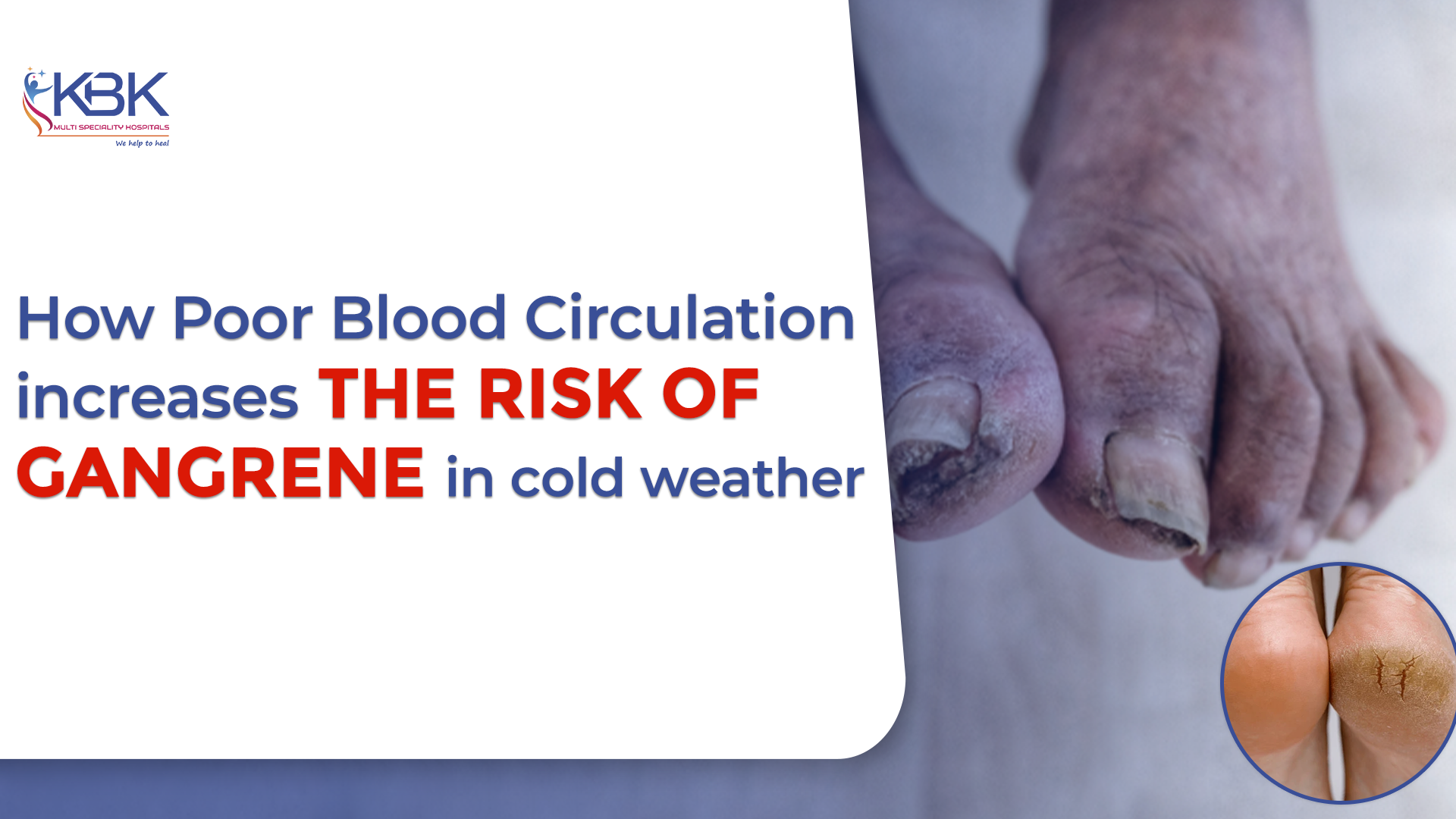
Poor blood circulation becomes a serious health concern during cold weather, especially for people with diabetes, vascular conditions, or long-term illnesses. Winter temperatures cause blood vessels to narrow, reducing the flow of oxygen and nutrients to the body’s tissues. When circulation drops too low, tissues can weaken, heal slowly, and in severe cases, develop gangrene. Understanding this connection helps people recognize risks early and seek timely care.
Understanding Blood Circulation and Its Role in Tissue Health
Blood circulation plays a vital role in keeping tissues healthy by delivering oxygen, nutrients, and immune cells. When circulation is normal, the body can repair minor injuries and fight infections effectively. However, poor blood circulation limits this supply, making tissues more vulnerable to damage, especially in extremities like toes, feet, fingers, and legs.
Medical experts consistently observe that reduced circulation is one of the leading factors behind non-healing wounds and tissue breakdown.
Why Cold Weather Makes Circulation Worse
Cold temperatures cause blood vessels to constrict as the body tries to conserve heat. This natural response further reduces blood flow to outer areas of the body. For individuals already experiencing poor blood circulation, winter can significantly worsen the condition.
Lower activity levels during cold months also slow down circulation, increasing the risk of tissue damage and infection.
How Poor Blood Circulation Leads to Gangrene
Gangrene develops when body tissue dies due to a lack of blood supply, infection, or both. Poor blood circulation prevents oxygen from reaching tissues, causing cells to weaken and eventually die. Once tissue becomes damaged, it is more likely to become infected, especially when the immune response is reduced.
Doctors warn that untreated circulation problems in cold weather can allow tissue damage to progress quickly, increasing the risk of gangrene.
Early Warning Signs to Watch For
Recognizing symptoms early is essential. Signs linked to poor blood circulation that may signal a risk of gangrene include:
- Persistent coldness in feet or hands
- Skin color changes such as pale, blue, or dark patches
- Numbness or tingling
- Slow-healing cuts or sores
- Pain or discomfort at rest
Healthcare professionals stress that early attention to these symptoms can prevent severe outcomes.
Who Is at Higher Risk During Winter?
Certain individuals face a higher risk when poor blood circulation worsens in cold weather. These include people with diabetes, peripheral artery disease, smoking habits, chronic infections, or a history of foot wounds. Age and long-term health conditions also increase vulnerability.
Clinical experience shows that winter-related complications are more common when circulation issues are left unmanaged.
Prevention and Management
Preventing gangrene starts with improving circulation and protecting tissues. Doctors recommend staying warm, avoiding tight footwear, keeping skin moisturized, and maintaining regular movement to encourage blood flow. Managing blood sugar levels and addressing circulation problems early plays a crucial role in reducing risks associated with poor blood circulation.
Regular medical checkups help identify circulation issues before they progress into serious complications.
Importance of Timely Medical Care
Medical specialists emphasize that gangrene is preventable in many cases when circulation problems are addressed early. Advanced medical care focuses on restoring blood flow, controlling infection, and supporting natural healing. Trustworthy healthcare providers rely on evidence-based approaches to protect tissue health and prevent long-term damage.
Conclusion
Cold weather significantly increases health risks for individuals with poor blood circulation, making them more vulnerable to tissue damage and gangrene. Reduced blood flow, combined with lower temperatures, weakens the body’s ability to heal and fight infection. By understanding warning signs, maintaining proper care, and seeking expert medical guidance early, serious complications can often be avoided. Protecting circulation during winter is not just about comfort—it is essential for long-term health and tissue survival.