
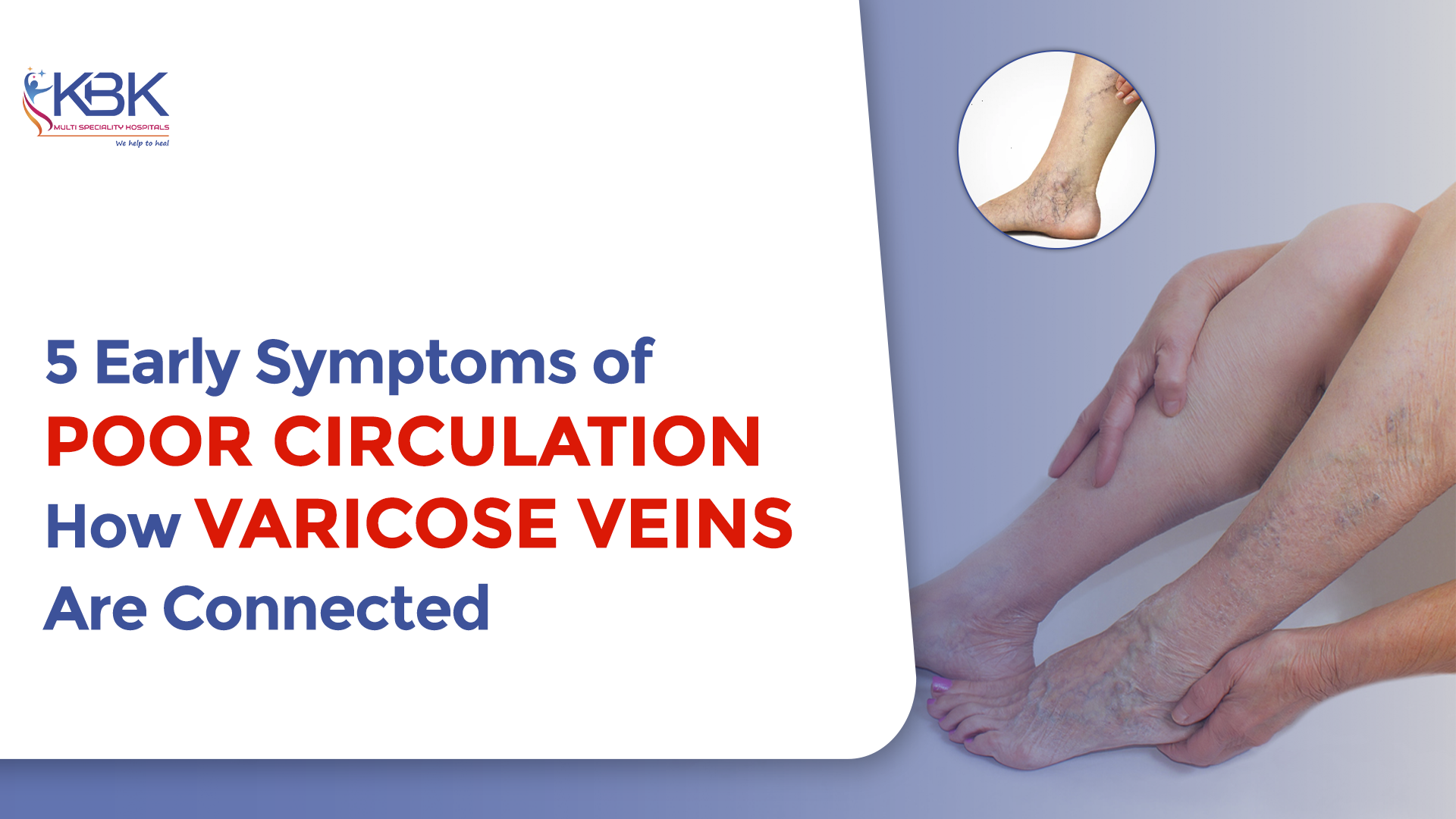
Poor circulation symptoms in the legs often start with small changes that many people ignore. You may feel heaviness in your legs, mild pain, or swelling near your ankles after a long day. Some people notice veins becoming more visible. These symptoms may look normal at first, but they can point to problems with blood flow in the leg veins. Over time, weak veins can lead to varicose veins and long-term discomfort.
What Are Poor Circulation Problems in the Legs?
When blood does not flow well from the legs back to the heart, it starts to collect in the veins. This can cause tiredness, aching, and swelling in the legs. In the beginning, poor blood flow symptoms may appear sometimes and go away. If they keep coming back, it means your veins are under pressure.
How Varicose Veins Are Linked
Veins in the legs have small valves that help blood move upward. When these valves become weak, blood flows backward and stays in the veins. This makes the veins swell and become twisted. That is how varicose veins form. As blood flow becomes slower, people may notice heaviness, itching, or cramps in the legs.
Symptoms You Should Not Ignore
Some common poor circulation symptoms include:
- Heavy or tired legs
- Swelling near ankles or calves
- Visible, bulging veins
- Itching or dry skin on legs
- Leg cramps, especially at night
If these symptoms keep coming back, it is better to get your legs checked.
Who Is More at Risk?
People who stand or sit for a long time may have blood flow problems.
Being overweight, pregnant, or having vein problems in the family can also increase the risk.
Simple Ways to Improve Leg Circulation
Small daily habits can help:
- Walk for a few minutes every hour
- Take breaks from sitting or standing in the same position for long hours
- Raise your legs when resting
- Stay active and maintain a healthy weight
- Wear comfortable footwear
Conclusion
Poor circulation symptoms in the legs should not be ignored. They often show that the veins are under strain and may lead to varicose veins. Simple care and early treatment can keep your legs healthy and reduce pain.
FAQ’s
1. What are poor circulation symptoms in the legs?
Poor blood flow can cause heavy or tired legs, ankle swelling, visible veins, itching, and leg cramps at night. These symptoms often appear after long periods of standing or sitting and may improve with rest.
2. Can varicose veins affect blood flow in the legs?
Yes, varicose veins can slow down normal blood flow in the legs due to weak vein valves.
This leads to blood pooling in the veins, causing swelling, heaviness, and discomfort.
3. Are poor circulation symptoms serious?
In the early stage, symptoms may be mild, but they can get worse if ignored.
Long-term poor circulation can lead to skin changes and ongoing leg discomfort.
4. Why do my legs feel heavy after standing long?
Standing for long hours makes it harder for blood to move upward to the heart.
This causes blood to collect in the legs, leading to heaviness and mild pain.
5. Do varicose veins mean blood flow is poor?
Not always. But if varicose veins come with swelling, pain, or itching, blood flow may be affected. These symptoms suggest the veins are under strain and blood flow is slower.