
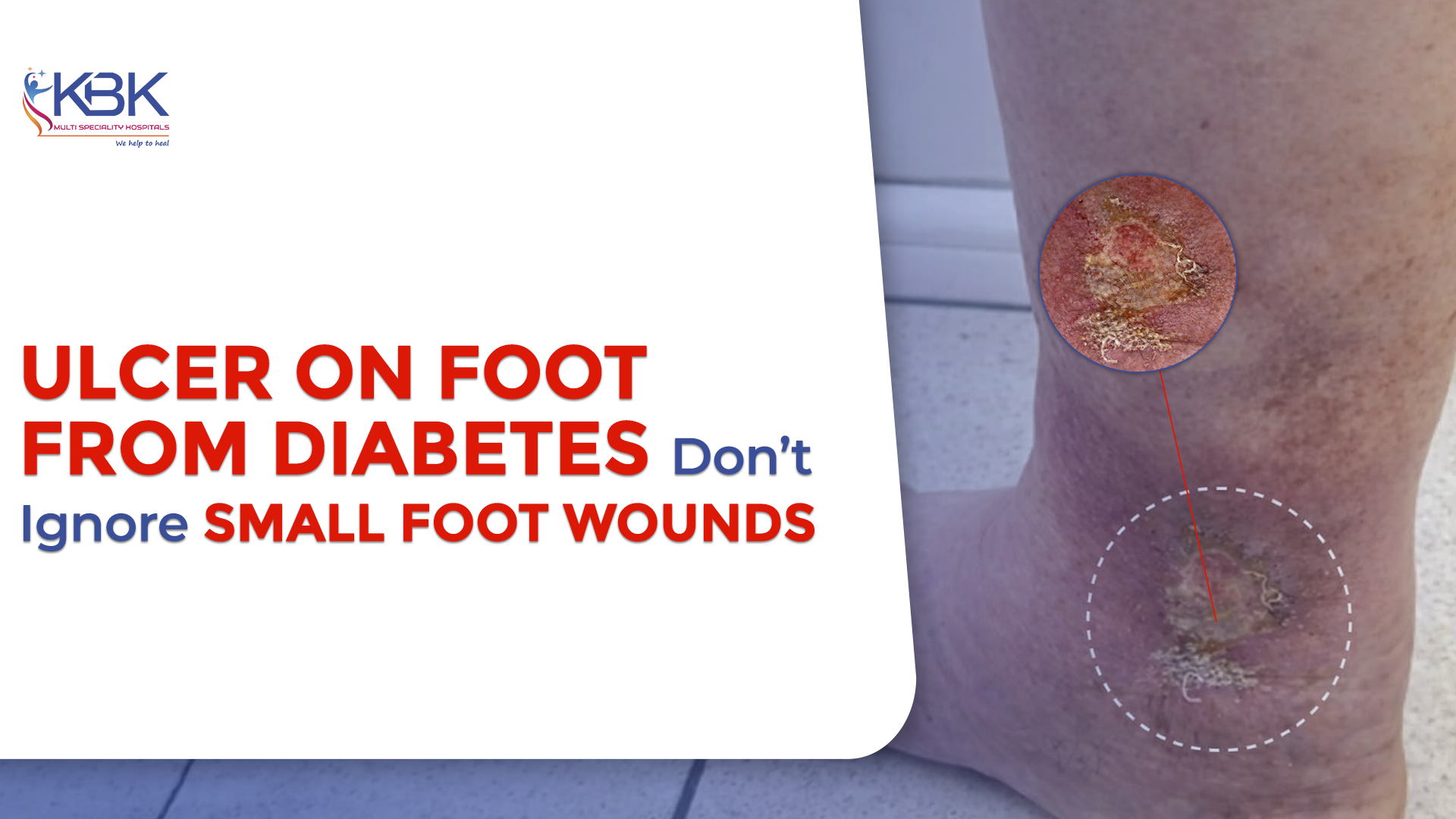
Ulcer on foot from diabetes doesn’t usually start with something scary. For many people, it begins with a small cut, a shoe bite, or a cracked heel that feels like no big deal. Life gets busy, the wound is painless, and it’s easy to assume it will heal on its own. But diabetes changes how the body responds to even minor injuries. Reduced sensation in the feet and slower healing mean that what looks like a “small problem” today can quietly turn into a serious wound over time.
When “It’s Just a Small Cut” Becomes Risky
Many patients share a similar story: they noticed a tiny wound but didn’t pay much attention because it didn’t hurt. Days turned into weeks, and the area started to look unhealthy—red, swollen, or wet. This is how an ulcer on foot from diabetes often develops. Because nerve damage reduces pain, people continue to walk on the injured area, putting repeated pressure on the same spot. Without realizing it, the wound deepens instead of healing.
What’s Actually Slowing the Healing?
Diabetes affects both blood flow and the body’s natural repair process. When circulation to the feet is reduced, oxygen and nutrients don’t reach the wound effectively. At the same time, high blood sugar levels make it harder for the body to fight bacteria. This combination creates the perfect environment for small wounds to stay open longer and become infected. Over time, the skin breaks down further, and the wound can turn into a chronic ulcer.
Signs You Shouldn’t Brush Off
Some changes should never be ignored. A wound that looks larger over time, leaks fluid, smells unpleasant, or causes redness around the edges needs medical attention. Even if there is no pain, warmth, swelling, or a change in skin color around the wound can be a warning sign. Doctors often stress that early treatment at this stage can prevent long-term complications.
Who Needs to Be Extra Careful?
People who have had diabetes for many years, those with poor sugar control, smokers, and individuals who already have foot shape changes or calluses need to be especially careful. A previous history of foot wounds also increases the risk of getting another ulcer on foot from diabetes.
Simple Habits That Make a Real Difference
Daily foot checks, wearing comfortable shoes, keeping the skin moisturized, and cleaning even small cuts properly can go a long way. These simple habits sound basic, but in real life, they are often what prevent a minor wound from becoming a long-term problem.
Conclusion
Ulcer on foot from diabetes doesn’t appear overnight. It grows out of small wounds that are ignored because they seem harmless at first. Paying attention early, even when there’s no pain, can protect your feet and help avoid serious complications later.
FAQ’s:
1. What is an ulcer on foot from diabetes?
An ulcer on foot from diabetes is an open sore that develops when a small cut or blister does not heal properly. Diabetes can slow healing and reduce feeling in the feet, which allows minor wounds to worsen over time.
2. How does a small cut turn into a diabetic foot ulcer?
Small cuts can become ulcers when they are not noticed or treated early. Because people with diabetes may not feel pain in their feet, pressure and friction continue on the injured area, causing the wound to deepen instead of heal.
3. Are diabetic foot ulcers painful?
Not always. Many people with diabetes have nerve damage in their feet, which reduces pain sensation. This is why a serious wound may not hurt and can go unnoticed until it becomes infected.
4. How long does it take for a diabetic foot ulcer to heal?
Healing time varies from person to person. Small ulcers may take weeks to heal with proper care, while deeper or infected ulcers can take much longer. Early treatment and good blood sugar control can speed up healing.
5. What are the early warning signs of a diabetic foot ulcer?
Early signs include redness, swelling, drainage from a wound, foul smell, skin breakdown, or a sore that does not heal within a few days. Any change in the skin around a wound should be checked by a doctor.