
Introduction
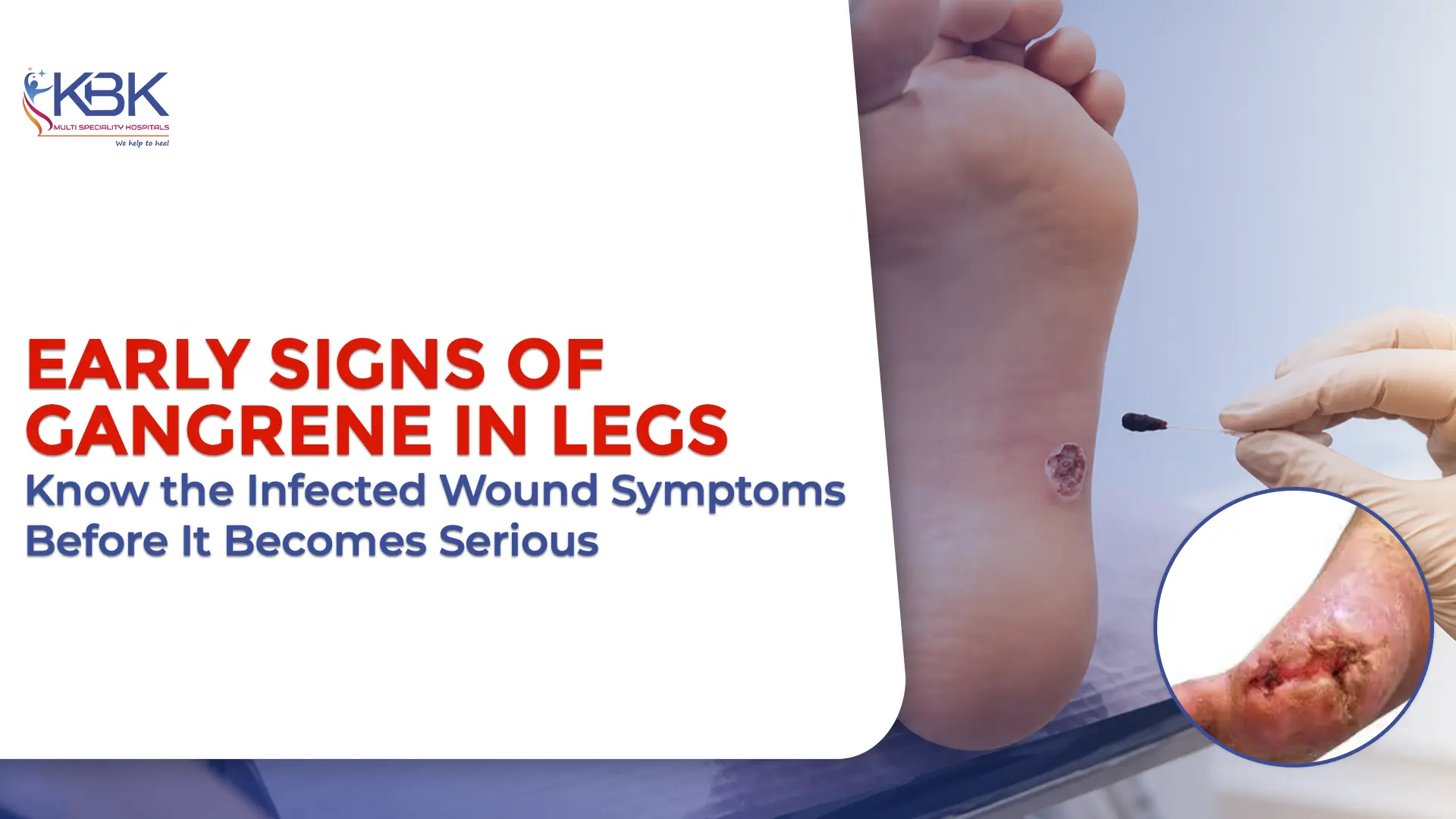
A small wound on the leg or foot may sometimes appear harmless, but ignoring certain infected wound symptoms can lead to serious complications like gangrene. Gangrene occurs when body tissue dies due to poor blood circulation or severe infection. It commonly affects the legs, toes, feet, and fingers, especially in people with diabetes or poor blood flow.
Recognizing the warning signs early can help prevent severe infection, tissue damage, and even amputation. Understanding the symptoms of gangrene is especially important for diabetic patients, as delayed treatment can worsen the condition quickly.
What Is Gangrene?
Gangrene is a serious medical condition where body tissue dies because of reduced blood supply, bacterial infection, or untreated wounds. It most commonly develops in the legs, feet, or toes.
People with diabetes, poor circulation, smoking habits, or chronic infections are at a higher risk of developing gangrene.
Early Signs of Gangrene in Legs
Identifying the condition early is important to avoid severe complications. Below are some common infected wound symptoms that should never be ignored.
1. Skin Discoloration
One of the earliest signs is a change in skin color around the wound or affected area. The skin may appear:
- dark red
- purple
- brown
- bluish
- black
In severe cases, patients may notice black skin on toes or around the wound margins.
2. Persistent Swelling and Redness
Swelling around the foot or leg that does not reduce over time can indicate infection. Redness that spreads gradually may suggest worsening tissue damage.
3. Severe Pain or Sudden Numbness
Gangrene may initially cause severe pain, burning sensation, or tenderness. As tissue damage increases, the area may become numb due to nerve damage.
4. Foul-Smelling Discharge
A wound producing pus, fluid leakage, or bad odor is a major warning sign of infection. This is one of the most common infected wound symptoms associated with gangrene.
5. Skin Becoming Cold to Touch
Reduced blood circulation may make the affected area feel unusually cold compared to surrounding skin.
6. Non-Healing Wounds
Cuts, ulcers, or blisters that fail to heal properly should not be ignored, especially in diabetic patients.
Diabetic Gangrene Symptoms
People with diabetes are more vulnerable to severe infections because high blood sugar levels affect blood circulation and wound healing.
Common diabetic gangrene symptoms include:
- foot ulcers that do not heal
- blackened skin around wounds
- swelling in the foot
- pus discharge
- numbness in legs or toes
- foul smell from wounds
- skin turning dark or black
Ignoring these symptoms may increase the risk of serious complications.
Causes of Gangrene in Legs
Several conditions can increase the risk of gangrene, including:
- diabetes
- poor blood circulation
- untreated infections
- severe injuries
- smoking
- peripheral artery disease
- deep wounds or burns
When Should You See a Doctor?
Immediate medical attention is necessary if you notice:
- spreading redness
- black skin on toes
- severe pain in the leg
- foul smell from wounds
- fever with wound infection
- swelling that worsens quickly
- non-healing diabetic wounds
Early diagnosis and treatment can help prevent permanent tissue damage.
Treatment Options for Gangrene
Treatment depends on the severity of the infection and tissue damage.
Common treatment methods include:
- wound cleaning and dressing
- antibiotics
- removal of dead tissue
- advanced wound care
- improving blood circulation
- diabetic wound management
In severe cases, surgery may be required to stop the infection from spreading.
How to Prevent Gangrene
You can reduce the risk of gangrene by:
- keeping wounds clean
- managing diabetes properly
- checking feet daily
- avoiding smoking
- treating infections early
- wearing proper footwear
- seeking medical care for non-healing wounds
Frequently Asked Questions
Can gangrene start from a small wound?
Yes. Even a small cut or blister can become infected and develop into gangrene if left untreated, especially in diabetic patients.
What does gangrene look like in the beginning?
Early gangrene may appear as redness, swelling, skin discoloration, or black skin on toes and surrounding tissue.
Is gangrene painful?
Gangrene may initially cause severe pain, but later stages can result in numbness due to nerve damage.
Who is at higher risk of gangrene?
People with diabetes, poor blood circulation, smoking habits, or untreated infections are at higher risk.
Conclusion
Gangrene is a serious condition that should never be ignored. Recognizing infected wound symptoms early can help prevent severe complications and improve recovery outcomes. Symptoms such as black skin on toes, foul-smelling wounds, swelling, and non-healing ulcers require immediate medical attention.
Patients with diabetes should be especially careful, as diabetic gangrene symptoms can worsen rapidly if treatment is delayed. Early diagnosis and proper wound care can help protect the affected limb and prevent further complications.



1 thought on “Early Signs of Gangrene in Legs You Should Never Ignore”
Comments are closed.