
Introduction: Why Understanding Chronic Conditions Is Important
Chronic conditions are long-term health problems that usually develop slowly and may require ongoing medical care. These conditions can affect daily life, mobility, and overall well-being if not managed properly.
Many people ignore early symptoms until complications appear. However, understanding chronic conditions early can help improve quality of life and reduce health risks through proper treatment and lifestyle changes.
Some untreated chronic conditions may increase the risk of complications such as diabetic foot ulcers, infections like cellulitis, or circulation problems linked to varicose veins.

Simple Explanation of Chronic Conditions
What are chronic conditions?
Chronic conditions are health problems that last for months or years and often need continuous care and monitoring.
Some common examples include:
- Diabetes
- High blood pressure
- Heart disease
- Arthritis
- Chronic kidney disease
- Varicose veins
Unlike short-term illnesses, chronic usually develop gradually and may worsen over time if left untreated.
Common Causes of Chronic Conditions
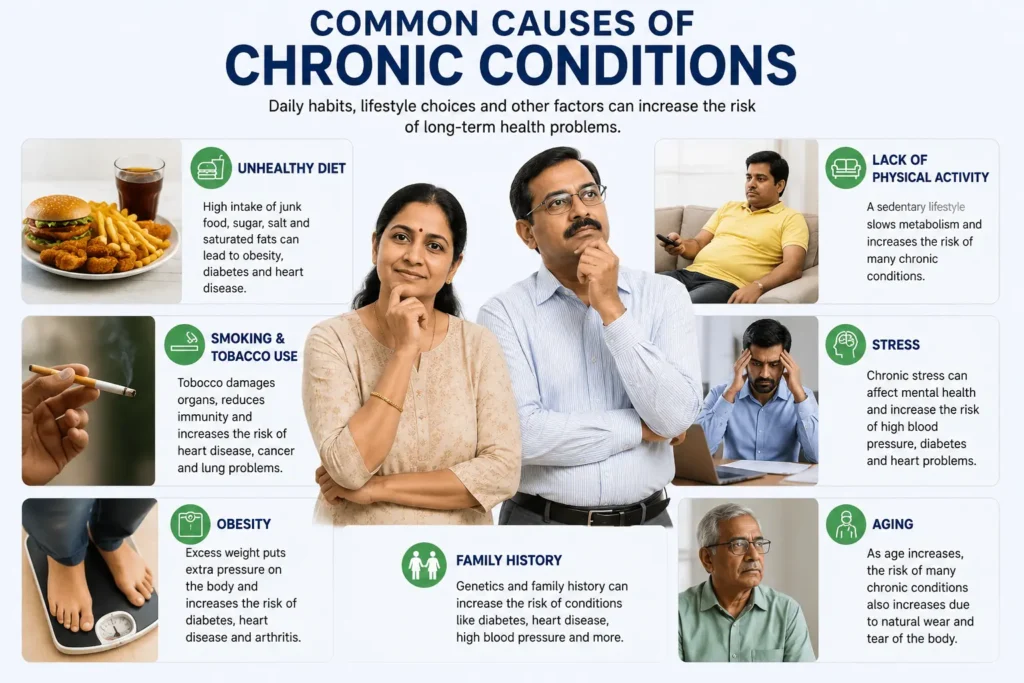
Several factors can increase the risk of developing chronic conditions.
Common Causes Include:
- Unhealthy diet
- Lack of physical activity
- Smoking or alcohol use
- Obesity
- Stress
- Family history or genetics
- Aging
Poor circulation and slow-healing wounds caused by chronic conditions may also increase the risk of severe infections and gangrene.
Symptoms of Chronic Conditions
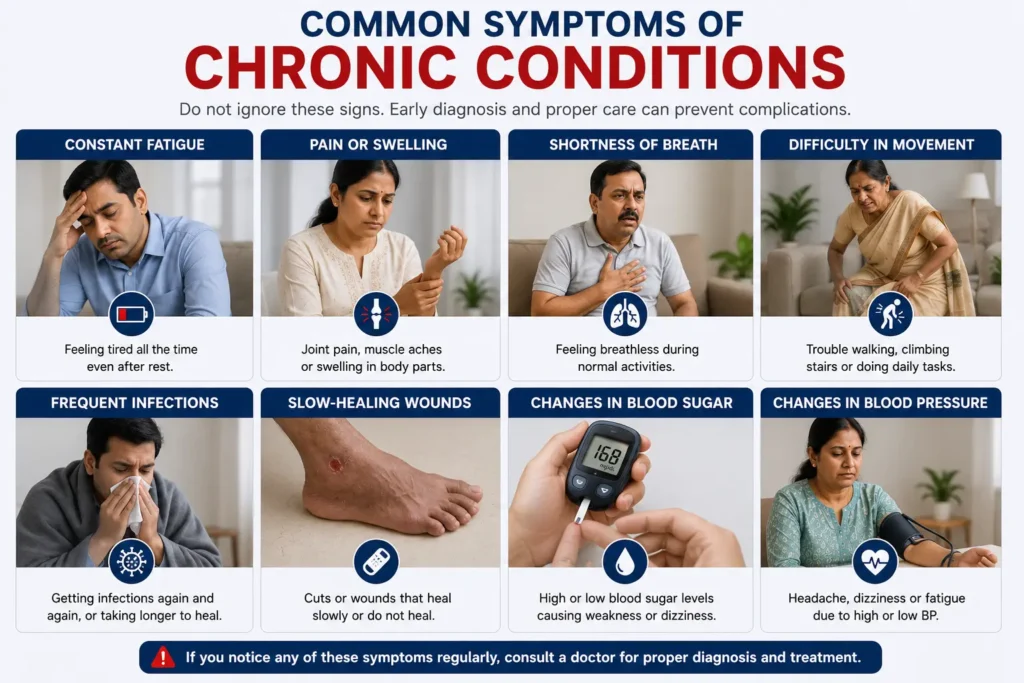
Symptoms may vary depending on the condition, but some warning signs are common.
Common Symptoms Include:
- Constant fatigue
- Pain or swelling
- Shortness of breath
- Difficulty walking or moving
- Frequent infections
- Slow-healing wounds
- Changes in blood sugar or blood pressure
Symptoms That Need Medical Attention:
- Chest pain
- Severe swelling
- Non-healing ulcers
- Sudden weakness or confusion
Early diagnosis can help control chronic conditions before complications develop.
Treatment and Management of Chronic Conditions
The treatment of chronic conditions depends on the type and severity of the illness.
Common Treatment Methods:
- Medications
- Regular medical checkups
- Lifestyle changes
- Physical activity and exercise
- Healthy diet plans
- Stress management
Long-term management helps control symptoms and prevent complications.
Long-Term Management Tips for Chronic Conditions
Managing chronic conditions requires daily care and healthy habits.
1. Follow Medical Advice
Take medications regularly and attend follow-up appointments.
2. Maintain a Healthy Diet
Eat balanced meals with fruits, vegetables, and whole grains.
3. Stay Physically Active
Regular exercise improves circulation, mobility, and overall health.
4. Monitor Your Health
Track blood sugar, blood pressure, or other health markers if advised.
5. Avoid Smoking and Alcohol
These habits can worsen many chronic conditions.
6. Get Regular Checkups
Routine medical visits help detect complications early.
Regular medical care and early treatment are important to manage complications related to diabetes, circulation issues, and foot infections.
👉 Link:

Quick Overview: Chronic Conditions Management
| Management Method | Benefit |
| Healthy diet | Supports overall health |
| Exercise | Improves circulation and strength |
| Regular checkups | Detects complications early |
| Medication | Controls symptoms |
Complications of Untreated Chronic Conditions
If left untreated, chronic conditions can lead to serious complications such as:
- Heart disease
- Kidney damage
- Nerve problems
- Poor blood circulation
- Foot ulcers or infections
- Reduced quality of life
Early care and proper management can reduce these risks.
FAQs on Chronic Conditions
1. What are chronic conditions?
Chronic conditions are long-term health problems that need ongoing treatment and care.
2. Can chronic conditions be cured completely?
Some chronic conditions can be controlled but may not be completely cured.
3. How can chronic conditions be prevented?
Healthy eating, exercise, avoiding smoking, and regular checkups can help reduce risk.
4. Why is long-term management important?
Long-term management helps prevent complications and improves quality of life.



1 thought on “Chronic Conditions: Common Causes, Symptoms, and Long-Term Management Tips”
Comments are closed.