
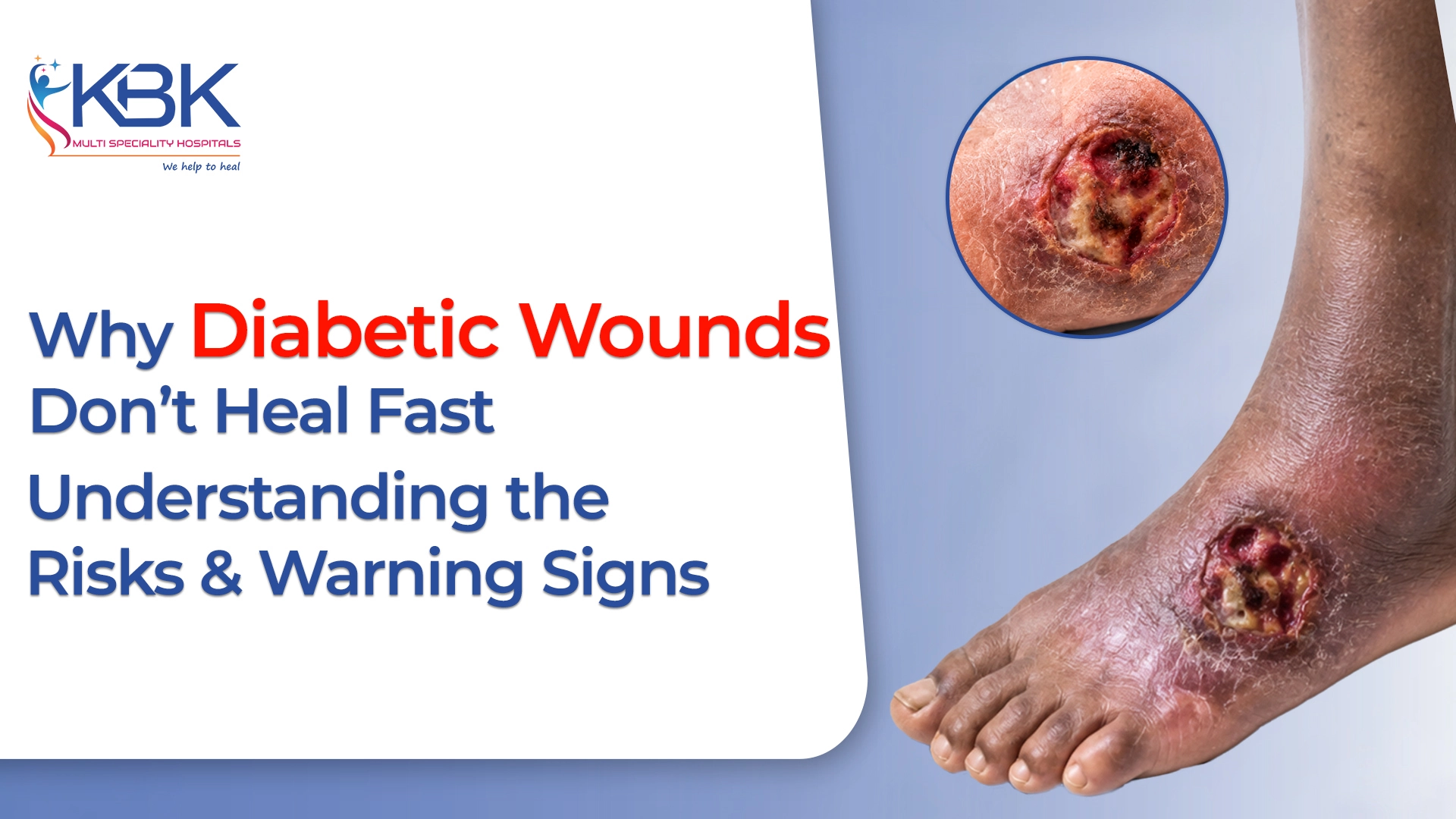
Even a small cut or blister can become a serious health concern for people with diabetes. Slow healing wounds are one of the most common complications associated with diabetes, especially when they affect the feet. A foot ulcer in diabetes can develop due to poor blood circulation, nerve damage, and weakened immunity, increasing the risk of severe infection.
Ignoring diabetic wounds may lead to diabetes wound complications such as infection, tissue damage, and in severe cases, gangrene. Understanding why diabetic wounds heal slowly can help patients seek timely treatment and prevent further complications.
What Is a Diabetic Wound?
A diabetic wound is a cut, sore, ulcer, or skin injury that heals slowly in people with diabetes. These wounds commonly appear on the feet due to constant pressure, poor circulation, and nerve damage.
When wounds do not heal properly, they may become infected and lead to serious health complications.
Why Diabetic Wounds Heal Slowly?
Several factors affect the body’s ability to heal wounds in diabetic patients.
1. Poor Blood Circulation
High blood sugar levels can damage blood vessels over time, reducing blood flow to the legs and feet. Poor circulation limits oxygen and nutrient supply to the wound, slowing the healing process.
Reduced blood flow also increases the risk of infection and tissue damage.
2. Nerve Damage (Diabetic Neuropathy)
Diabetes can damage nerves in the feet, causing numbness or reduced sensation. Many patients may not notice small cuts, blisters, or pressure injuries until the wound becomes severe.
This is one of the leading causes of foot ulcer in diabetes.
3. Increased Risk of Infection
High glucose levels weaken the immune system, making it difficult for the body to fight bacteria effectively. As a result, even minor wounds can develop into a diabetic wound infection if not treated early.
Signs of infection may include:
- swelling
- redness
- pus discharge
- foul smell
- pain around the wound
4. High Blood Sugar Levels
Uncontrolled diabetes directly affects the body’s natural healing ability. Elevated sugar levels damage tissues and reduce the efficiency of white blood cells responsible for healing and fighting infections.
5. Pressure on the Feet
Walking continuously on an injured foot may worsen the wound and delay healing. Poor footwear and repeated pressure are major reasons diabetic foot ulcers become severe.
Common Diabetes Wound Complications
Untreated wounds can lead to serious complications, including:
- diabetic foot ulcers
- cellulitis
- gangrene
- tissue damage
- abscess formation
- risk of amputation
- severe infections
Early diagnosis and proper wound care are important to avoid long-term complications.
Symptoms of Diabetic Wound Infection
Patients should seek immediate medical care if they notice:
- redness around the wound
- swelling in the foot
- warmth around the skin
- pus discharge
- foul odor
- blackened skin
- delayed wound healing
- fever or severe pain
These symptoms may indicate a progressing diabetic wound infection.
How to Prevent Foot Ulcers in Diabetes
Preventing wounds is one of the best ways to reduce complications.
Important prevention tips include:
- checking feet daily
- keeping feet clean and dry
- controlling blood sugar levels
- wearing comfortable footwear
- avoiding walking barefoot
- treating cuts immediately
- attending regular diabetic foot checkups
Treatment Options for Diabetic Wounds
Treatment depends on the severity of the wound and infection
Common treatment methods include:
- wound cleaning and dressing
- antibiotics
- blood sugar management
- advanced wound care
- removal of dead tissue
- pressure relief techniques
- infection control
Timely treatment can improve healing and reduce the risk of severe complications.
When Should You See a Doctor?
Immediate medical attention is necessary if:
- wounds are not healing
- swelling increases
- skin becomes dark or black
- pus develops
- pain worsens
- fever occurs with wound infection
Early treatment can help prevent diabetes wound complications and improve recovery outcomes.
Frequently Asked Questions
Why do diabetic wounds heal slowly?
Diabetic wounds heal slowly because diabetes affects blood circulation, nerve function, and the body’s ability to fight infection.
What causes foot ulcers in diabetes?
Foot ulcers are commonly caused by nerve damage, poor circulation, pressure on the feet, and untreated injuries.
Can diabetic wound infections become serious?
Yes. Untreated diabetic wound infection can lead to cellulitis, gangrene, tissue damage, and even amputation.
How can diabetic foot ulcers be prevented?
Regular foot care, blood sugar control, proper footwear, and early treatment of cuts or blisters can help prevent diabetic foot ulcers.
Conclusion
Diabetic wounds should never be ignored, even if they appear small initially. A foot ulcer in diabetes can worsen quickly due to poor circulation, nerve damage, and infection risk. Recognizing early symptoms and seeking proper treatment can help prevent serious diabetes wound complications.
Patients with diabetes should regularly monitor their feet, maintain healthy blood sugar levels, and seek medical attention for any non-healing wound or signs of diabetic wound infection.