
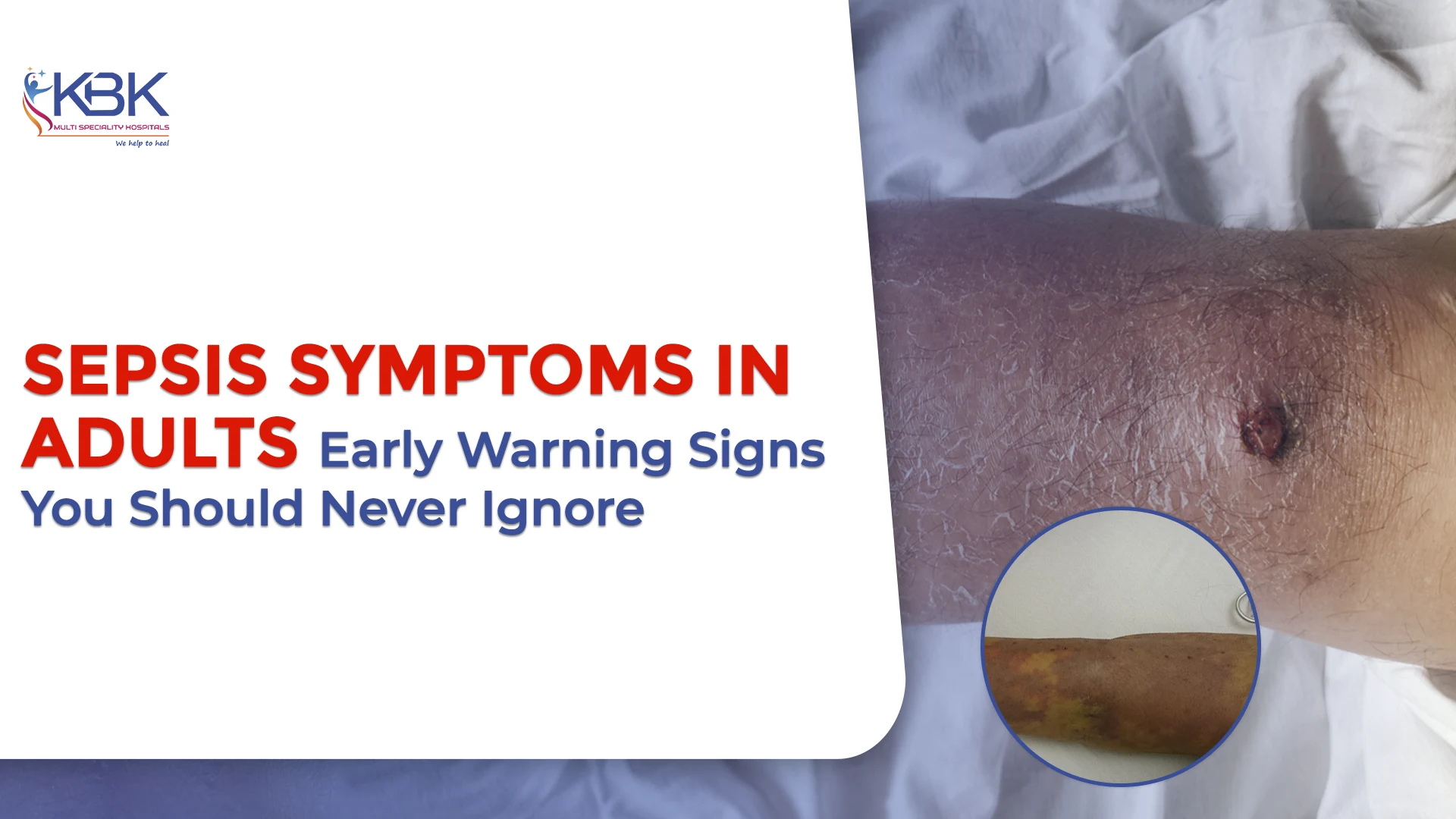
Introduction: Why Sepsis Symptoms Should Never Be Ignored
Sepsis symptoms can start off like a simple infection—but within hours, they can become life-threatening. Many people ignore early warning signs such as fever or fatigue, assuming they are minor. However, recognizing sepsis symptoms early can save lives and prevent serious complications.
Sepsis can often develop from infections such as skin infections like cellulitis, untreated wounds like diabetic foot ulcers, severe tissue damage like gangrene, or long-term vein conditions such as varicose veins.
According to the World Health Organization, sepsis is a life-threatening condition caused by the body’s response to infection.
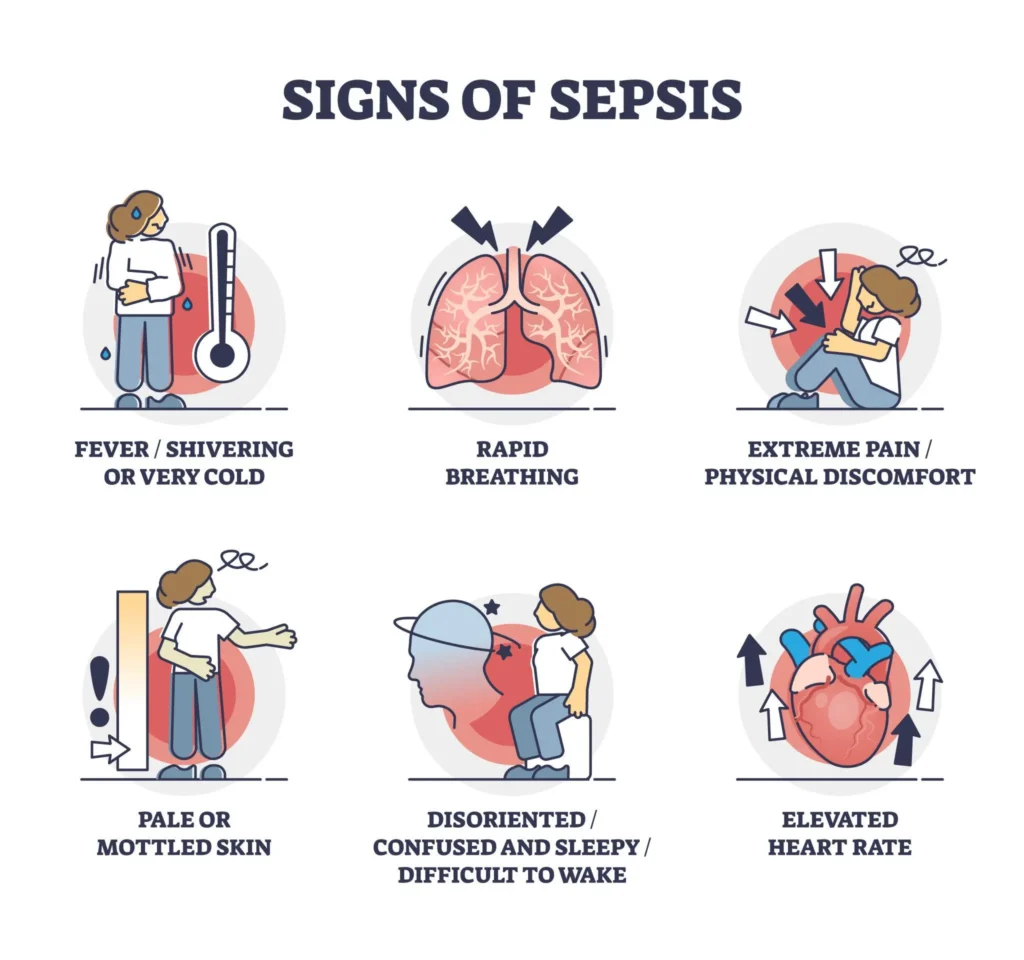
Simple Explanation of Sepsis Symptoms
Sepsis is a serious medical condition where the body has an extreme response to an infection. Instead of fighting the infection normally, the immune system triggers widespread inflammation that can damage organs.
What are sepsis symptoms?
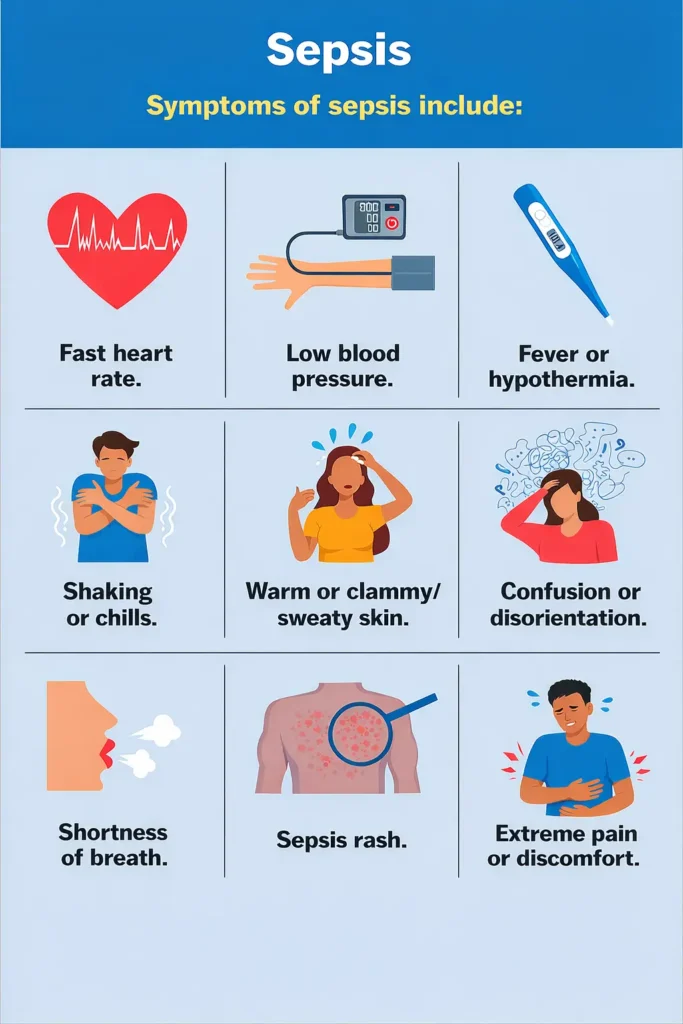
Sepsis symptoms include fever, rapid heart rate, fast breathing, confusion, and low blood pressure caused by the body’s severe response to infection.
How Sepsis Develops:
- Infection enters the body (lungs, urinary tract, skin, etc.)
- Immune system overreacts
- Inflammation spreads
- Organs may begin to fail
Sepsis Symptoms in Adults: Early & Severe Warning Signs
Recognizing sepsis symptoms early is critical.
Early Sepsis Symptoms:
- Fever or very low body temperature
- Rapid heart rate
- Fast breathing
- Chills or shivering
- Extreme weakness or fatigue
Advanced Sepsis Symptoms:
- Confusion or disorientation
- Shortness of breath
- Low blood pressure
- Cold, clammy, or pale skin
- Decreased urine output
Emergency Sepsis Symptoms (Need Immediate Care):
- Severe drop in blood pressure
- Blue lips or fingertips
- Difficulty staying awake
- Loss of consciousness
If you notice these sepsis symptoms, seek emergency medical care immediately.
Quick Overview: Sepsis Symptoms by Stage
| Stage | Sepsis Symptoms | Severity |
| Early Stage | Fever, fatigue, fast heart rate | Mild |
| Moderate Stage | Confusion, breathing difficulty | Moderate |
| Severe Stage | Low BP, reduced urine, cold skin | Severe |
| Septic Shock | Organ failure, unconsciousness | Critical |
Treatment for Sepsis Symptoms
Early treatment of sepsis symptoms is essential and always requires hospital care.
Common Treatments:
- IV antibiotics to fight infection
- IV fluids to stabilize blood pressure
- Oxygen therapy for breathing support
- Medications to maintain organ function
- ICU care in critical cases
Early treatment of sepsis symptoms greatly improves survival chances.

Doctor Warning on Sepsis Symptoms
Doctors strongly advise not to ignore sepsis symptoms.
Important:
If a person has an infection along with confusion, rapid breathing, or extreme weakness, it could be sepsis.
Delaying treatment can lead to:
- Organ failure
- Septic shock
- Increased risk of death
Don’t wait—early action can save a life.
FAQs on Sepsis Symptoms
1. What are the first sepsis symptoms in adults?
Early sepsis symptoms include fever, rapid heartbeat, fatigue, and breathing changes.
2. How quickly do sepsis symptoms worsen?
Sepsis symptoms can progress rapidly, sometimes within hours, making early detection crucial.
3. Who is at higher risk of sepsis?
- Older adults
- People with weak immune systems
- Patients with chronic diseases
- Recently hospitalized individuals
4. Can sepsis symptoms be treated at home?
No, sepsis symptoms require immediate hospital treatment and cannot be managed at home.