
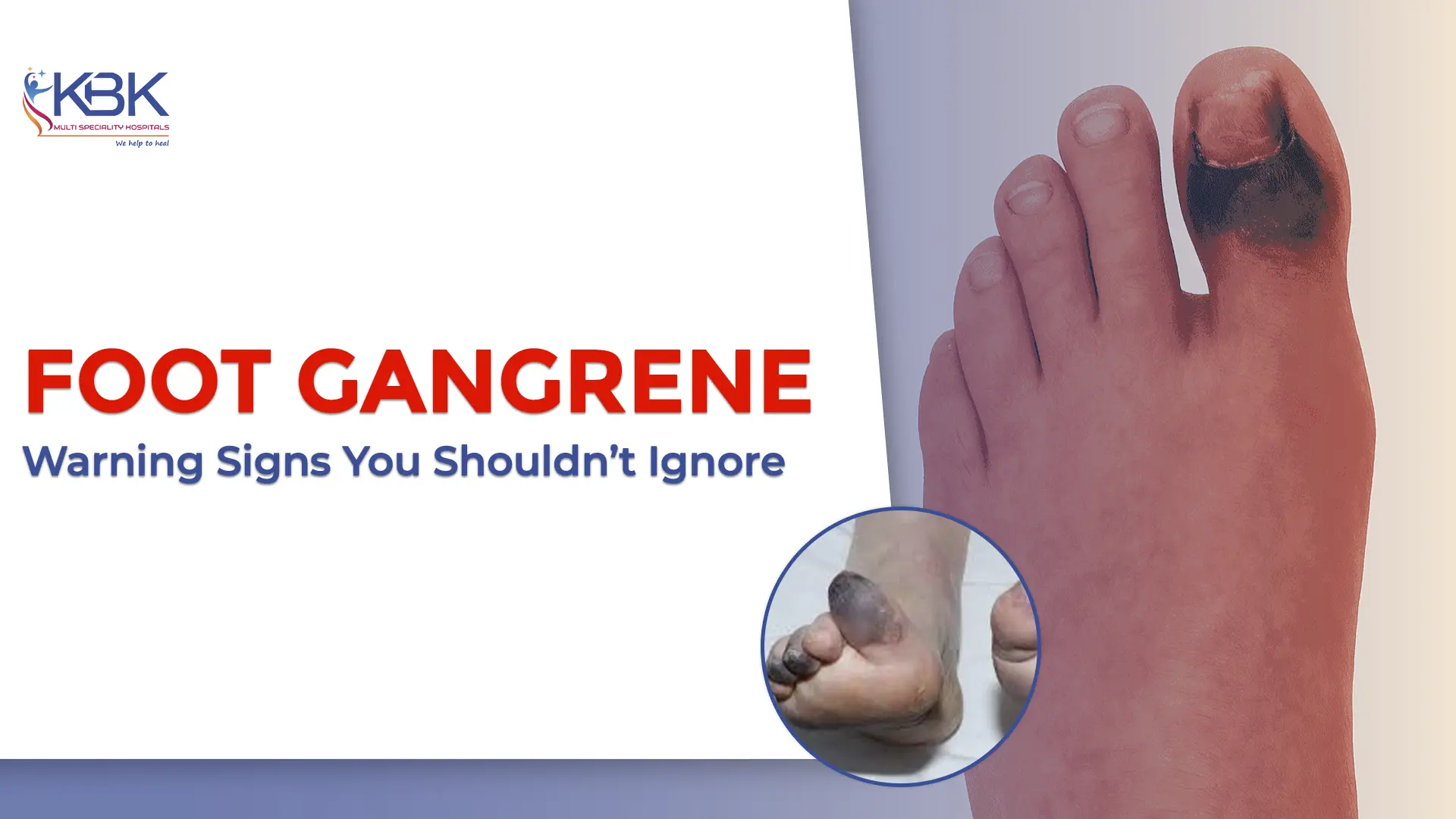
Introduction: Why Foot Gangrene Should Never Be Ignored
Foot Gangrene is a serious condition that can begin with mild symptoms like pain, discoloration, or a small wound but can quickly progress to tissue death if left untreated. Many people ignore these early signs, assuming they are minor issues. However, recognizing Foot Gangrene early is crucial to prevent severe complications, including infection spread and possible amputation.
Foot Gangrene often develops from untreated wounds such as diabetic foot ulcers, infections like cellulitis, or severe tissue damage conditions like gangrene.
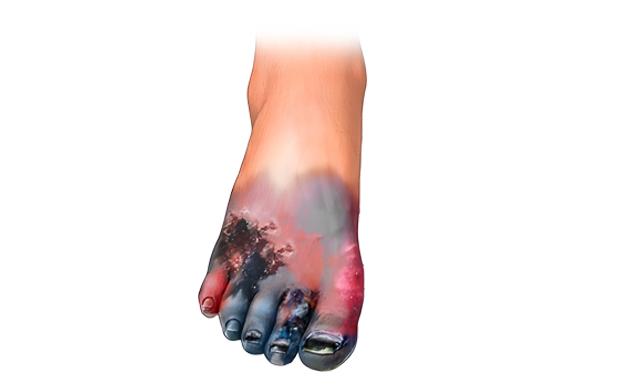
Simple Explanation of Foot Gangrene
Gangrene occurs when body tissue dies due to a lack of blood supply or a severe infection. When this condition affects the foot, it is known as Foot Gangrene. It is commonly seen in individuals with diabetes, poor circulation, or untreated wounds.
What is Foot Gangrene?
Foot Gangrene is a condition where tissues in the foot die due to infection or reduced blood flow, leading to serious complications if not treated promptly.
How Foot Gangrene Develops:
- Reduced blood flow to the foot
- Untreated cuts, wounds, or ulcers
- Nerve damage (especially in diabetic patients)
- Bacterial infection spreading in tissues
Foot Gangrene Warning Signs You Shouldn’t Ignore
Recognizing Foot Gangrene early can help prevent serious complications
Early Symptoms of Foot Gangrene:
- Persistent foot pain or numbness
- Skin discoloration (red, purple, or blue)
- Swelling in the foot
- Slow-healing wounds or ulcers
- Unusual foul smell from the wound
Advanced Symptoms of Foot Gangrene:
- Blackened or dead tissue
- Pus discharge or severe infection
- Loss of sensation in the foot
- Fever if infection spreads
Emergency Signs of Foot Gangrene:
- Rapid spreading infection
- Severe pain followed by numbness
- Signs of Sepsis such as fever, confusion, and rapid heartbeat
If you notice any of these Foot Gangrene symptoms, seek immediate medical care.
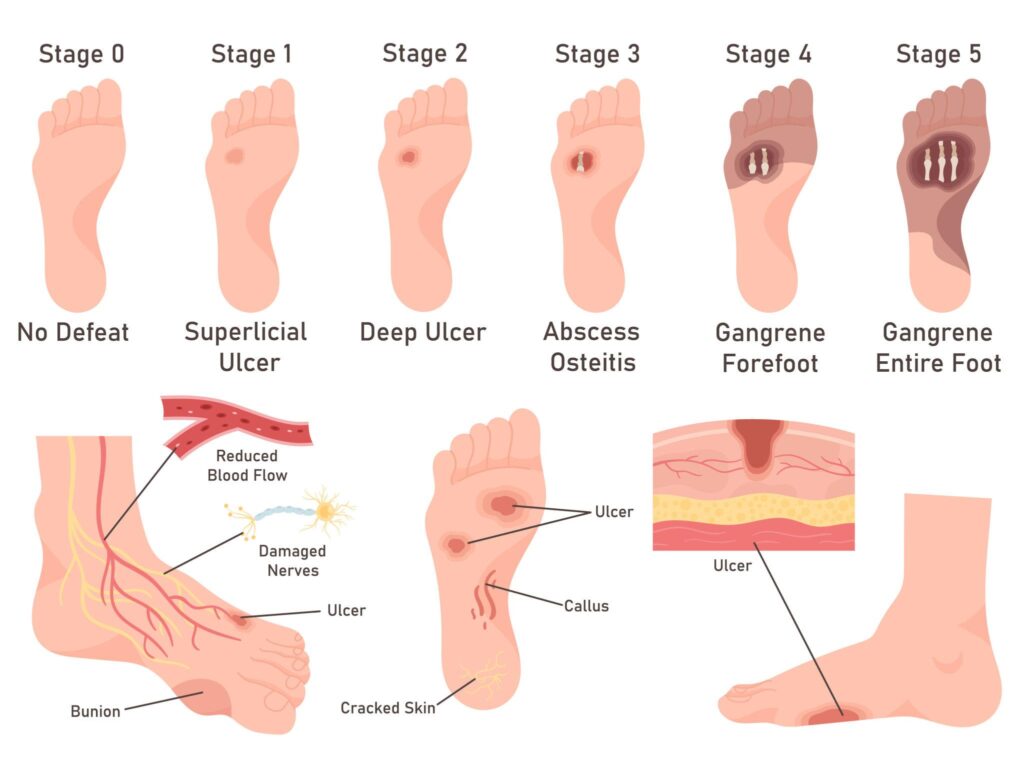
Quick Overview: Foot Gangrene Stages
| Stage | Symptoms | Severity |
| Early Stage | Pain, discoloration, slow healing | Mild |
| Moderate Stage | Infection, swelling, foul smell | Moderate |
| Severe Stage | Tissue death, black skin | Severe |
| Critical Stage | Infection spread, risk of sepsis | Critical |
Treatment for Foot Gangrene
Early treatment of Foot Gangrene is essential to prevent complications.
Common Treatment Options:
- Antibiotics to control infection
- Proper wound care and cleaning
- Removal of dead tissue (debridement)
- Procedures to restore blood flow
- Amputation in severe cases to stop infection spread
Early treatment of Foot Gangrene significantly increases the chances of saving the affected foot.
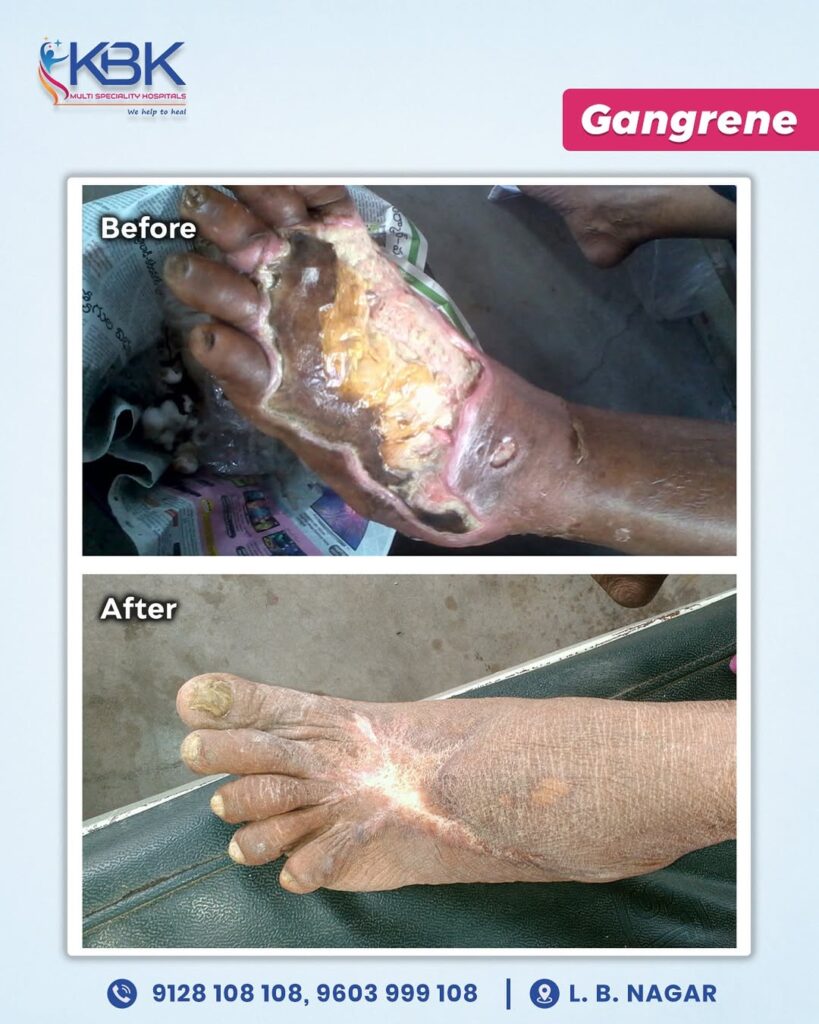
Doctor Warning on Foot Gangrene
Doctors strongly warn that Foot Gangrene should never be ignored.
Important:
If you have diabetes, poor circulation, or a foot wound that is not healing, you are at higher risk of developing Foot Gangrene.
Delaying treatment can lead to:
- Severe infection
- Spread of gangrene
- Risk of sepsis
- Loss of limb
Early medical intervention is critical to prevent life-threatening complications.
FAQs on Foot Gangrene
Early Foot Gangrene signs include pain, skin color changes, swelling, and slow-healing wounds.
People with diabetes
Individuals with poor blood circulation
Smokers
Patients with untreated wounds
In early stages, Foot Gangrene may be treated with medication and wound care. Advanced cases often require surgical intervention.
Foot Gangrene can spread rapidly, especially when caused by infection, making early treatment essential.



1 thought on “Foot Gangrene: Warning Signs You Shouldn’t Ignore”
Comments are closed.