
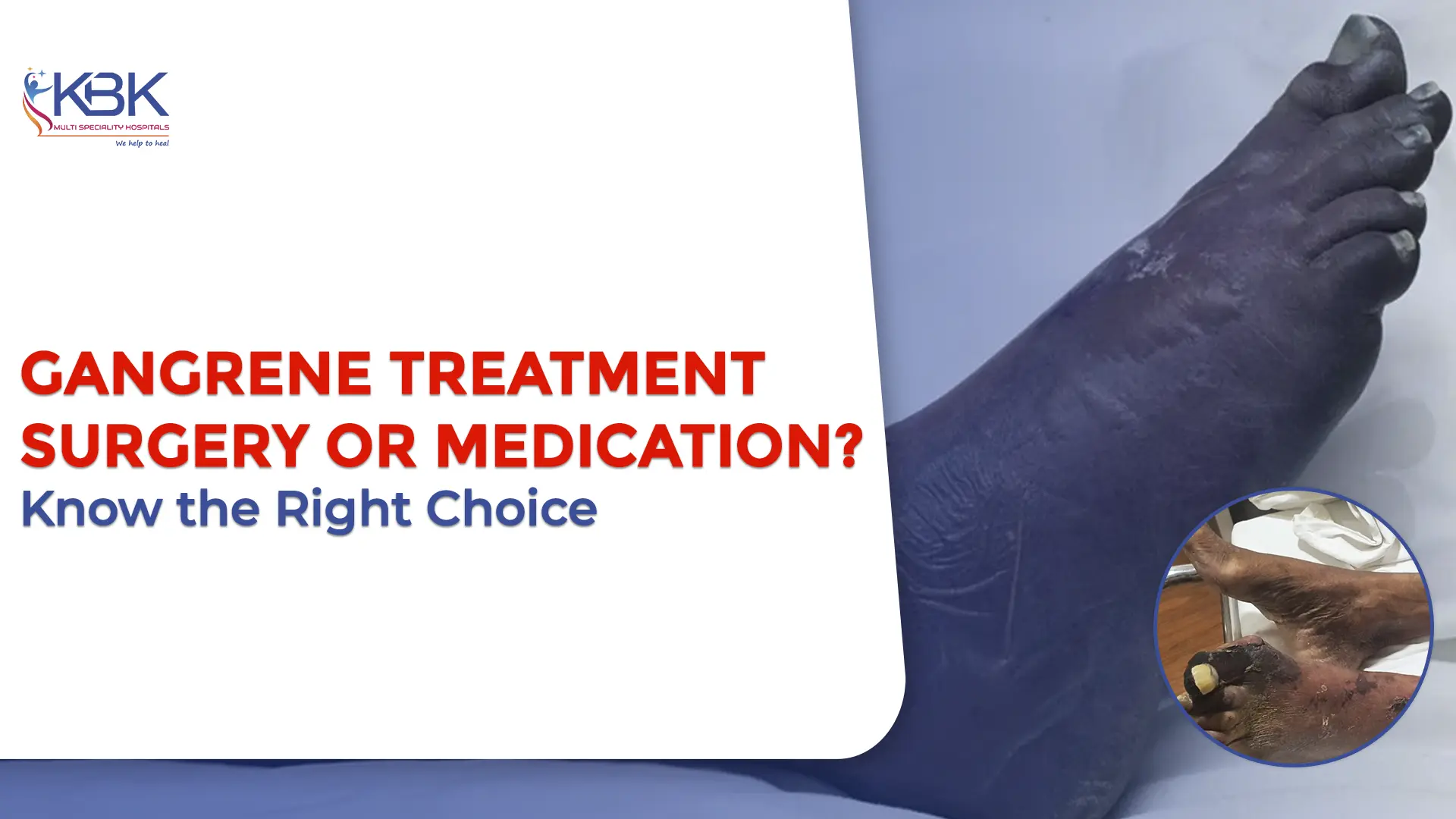
Introduction: Why Gangrene Treatment Is Important
Gangrene Treatment is a medical emergency and should never be delayed. What may start as a small wound, cut, or infection can quickly turn serious if not treated on time. Without proper Gangrene Treatment, the affected tissue can die, and the infection may spread to other parts of the body.
Early treatment not only helps control the infection but also increases the chances of saving the affected limb.
Gangrene often develops from untreated conditions such as diabetic foot ulcers, infections like cellulitis, or severe tissue damage like foot gangrene.
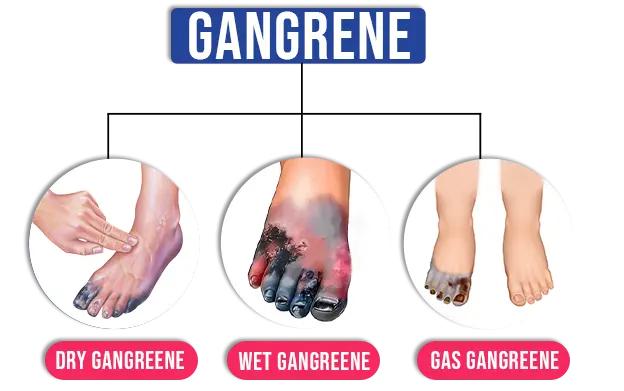
Simple Explanation of Gangrene Treatment
Gangrene occurs when body tissue dies due to poor blood supply or a severe infection. It commonly affects the feet, toes, and fingers.
What is Gangrene Treatment?
Gangrene Treatment includes medical and surgical methods used to stop infection, remove dead tissue, and restore blood flow to the affected area.
Why Early Gangrene Treatment Matters:
- Prevents infection from spreading
- Reduces the risk of amputation
- Helps preserve healthy tissue
- Improves recovery and survival
Signs That You Need Gangrene Treatment
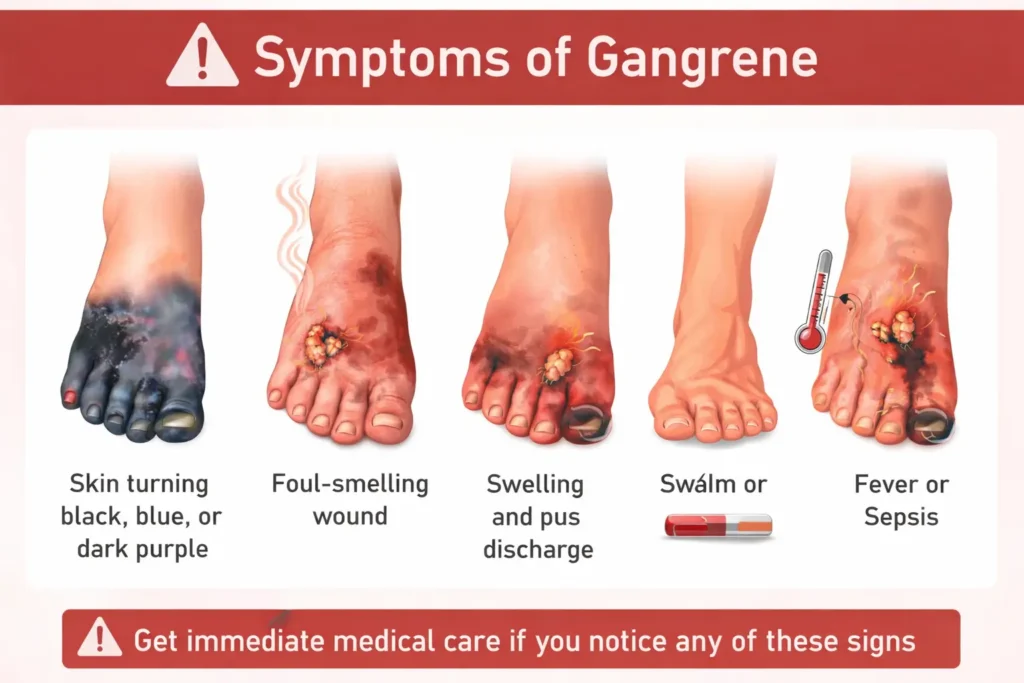
You may need immediate Gangrene Treatment if you notice:
- Skin turning black, blue, or dark purple
- Severe pain followed by numbness
- Foul-smelling wounds
- Swelling, redness, or pus
- Fever or signs of Sepsis
- Slow-healing wounds, especially in diabetic patients
These signs should never be ignored early medical care is critical.
In many cases, gangrene begins from neglected wounds or circulation problems such as varicose veins complications.
Gangrene Treatment Options: Surgery vs Medication
Treatment depends on how advanced the condition is. In most cases, doctors use a combination of both.
Medication-Based Gangrene Treatment
Medication is usually the first step, especially in early stages.
Includes:
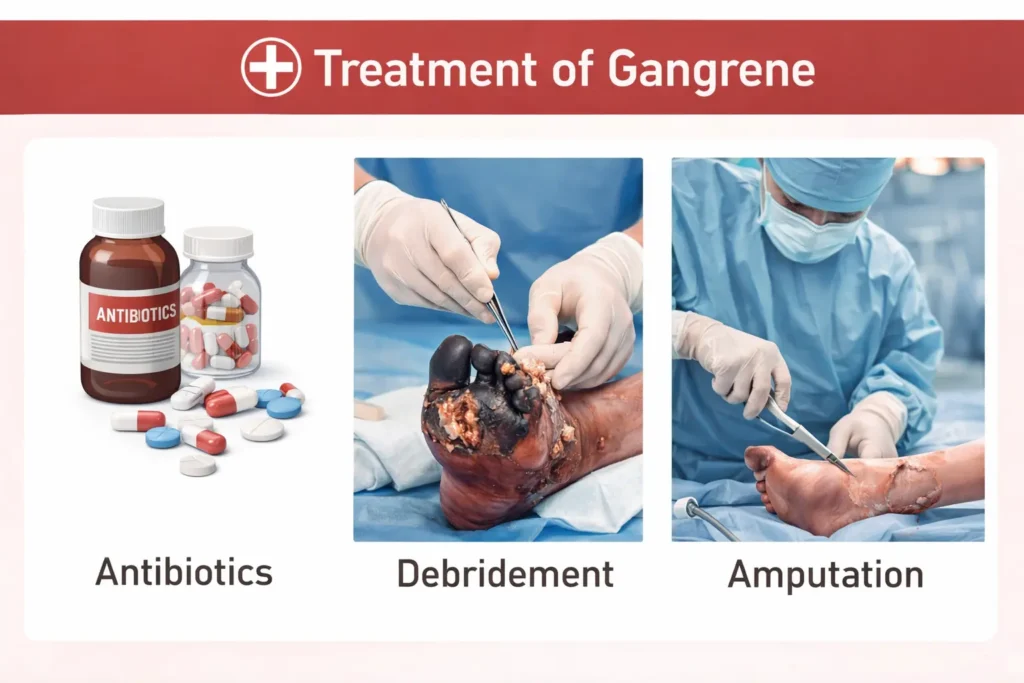
- Antibiotics to control infection
- Pain relief medicines
- Blood thinners to improve circulation
- IV fluids for stabilization
When Medication Is Useful:
- Early-stage gangrene
- Mild infections without major tissue damage
- As support after surgery
Limitations:
- Cannot remove dead tissue
- May not stop severe infection alone
- Works best only in early stages
Treating the root cause, such as diabetic foot ulcers, cellulitis, or gangrene, is essential for effective Gangrene Treatment.
Surgical Gangrene Treatment
Surgery is often necessary in moderate to severe cases.
Includes:
- Debridement – removal of dead tissue
- Revascularization – improving blood flow
- Skin grafting – repairing damaged areas
- Amputation – removing affected part (in severe cases)
When Surgery Is Required:
- Dead or blackened tissue is present
- Infection is spreading quickly
- Poor blood circulation
- Risk of serious complications like sepsis
Things to Consider:
- Requires hospital care
- May need multiple procedures
- Recovery time varies
Comparison: Surgery vs Medication in Gangrene Treatment
| Factor | Medication | Surgery |
| Purpose | Control infection | Remove dead tissue |
| Best For | Early stage | Advanced stage |
| Effectiveness | Limited alone | Highly effective |
| Recovery | Faster (mild cases) | Longer recovery |
| Outcome | Supports healing | Prevents spread & saves life |
Which Gangrene Treatment Is Better?
Short Answer:
The best Gangrene Treatment depends on the stage of the condition.
- Early stage: Medication may be enough
- Moderate stage: Combination of medication + minor procedures
- Severe stage: Surgery is necessary
In most cases, a combination of both treatments gives the best results.
Doctor Warning on Gangrene Treatment
Doctors strongly warn that delaying Gangrene Treatment can lead to serious complications.
If left untreated, it can cause:
- Rapid spread of infection
- Tissue death
- Risk of sepsis
- Loss of limb or life
Early diagnosis and timely treatment are the key to better outcomes.
FAQs on Gangrene Treatment
1. Can gangrene be treated without surgery?
Yes, early Gangrene Treatment may involve medications. However, advanced cases usually require surgery.
2. How quickly should treatment start?
Gangrene Treatment should begin immediately after symptoms appear.
3. Is amputation always necessary?
No, doctors try to save the affected area. Amputation is only done when absolutely necessary.
4. Can gangrene come back after treatment?
Yes, if the underlying cause (like diabetes or poor circulation) is not managed properly.