
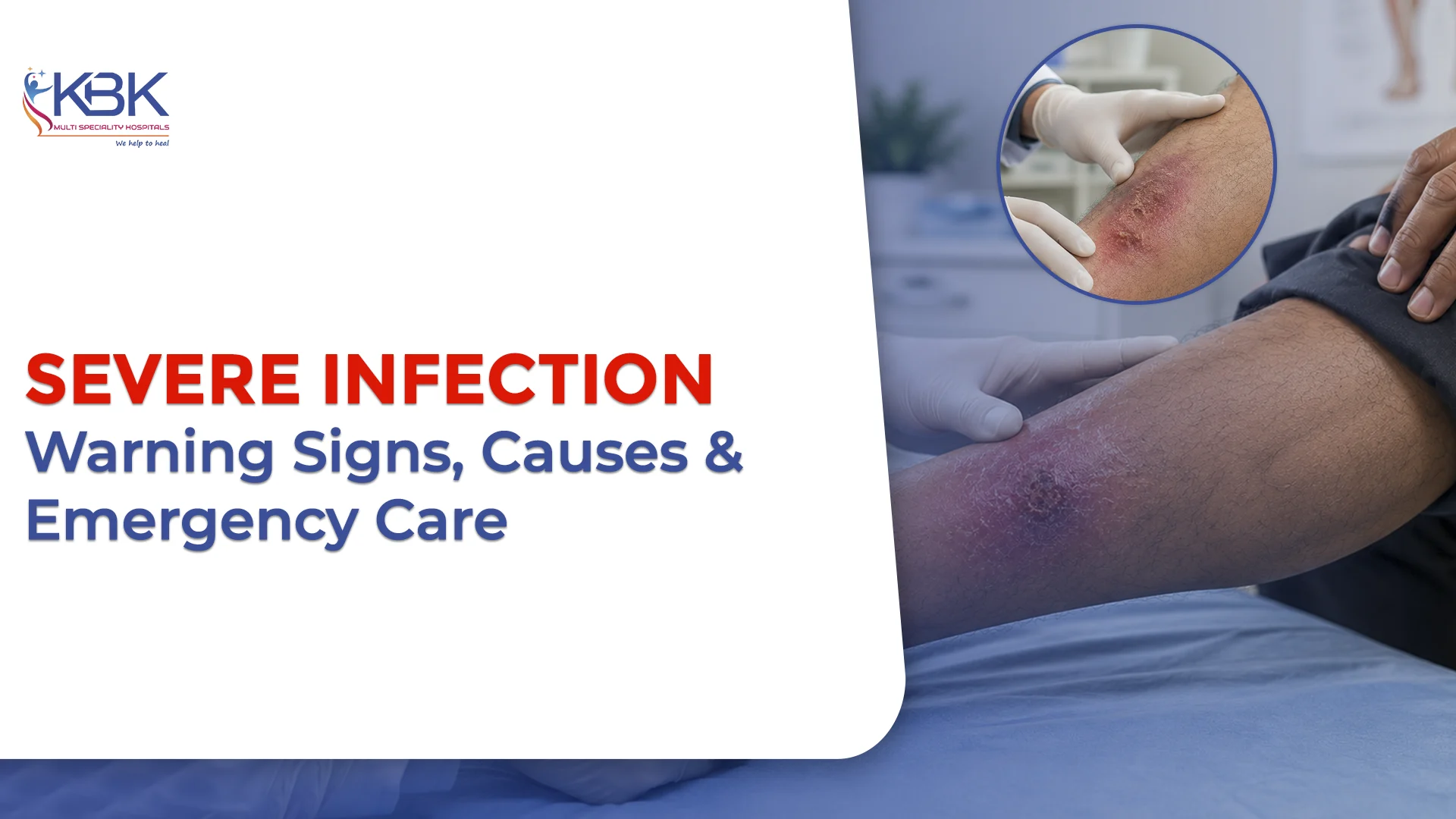
Introduction: Why Severe Infection Should Never Be Ignored
A Severe Infection can affect the body quickly and may become life-threatening if not treated on time. What may begin as a small wound, fever, or common infection can sometimes spread rapidly and damage important organs.
Recognizing the early signs of a Severe Infection is important because delayed treatment can lead to serious complications, including hospitalization and conditions like Sepsis
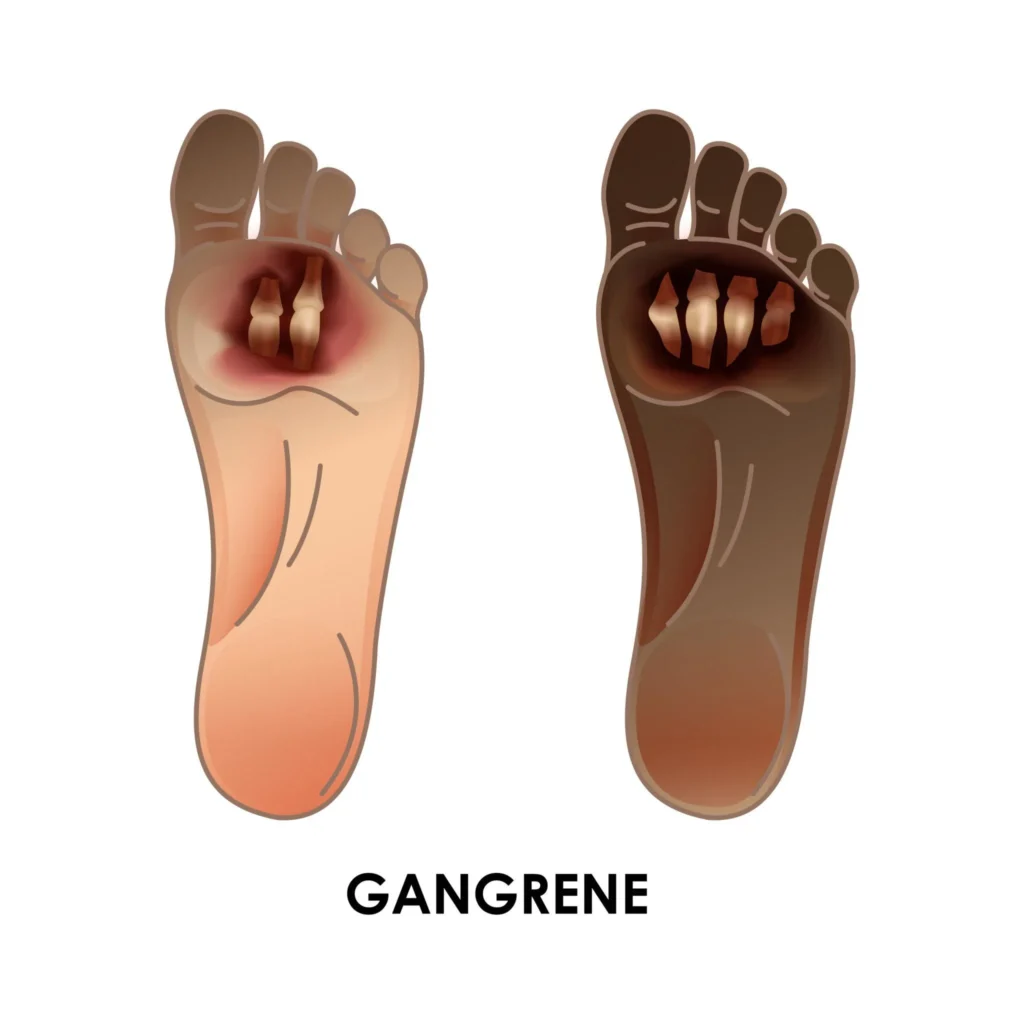
A Severe Infection may develop from untreated conditions such as diabetic foot ulcers, skin infections like cellulitis, or severe tissue damage like gangrene.
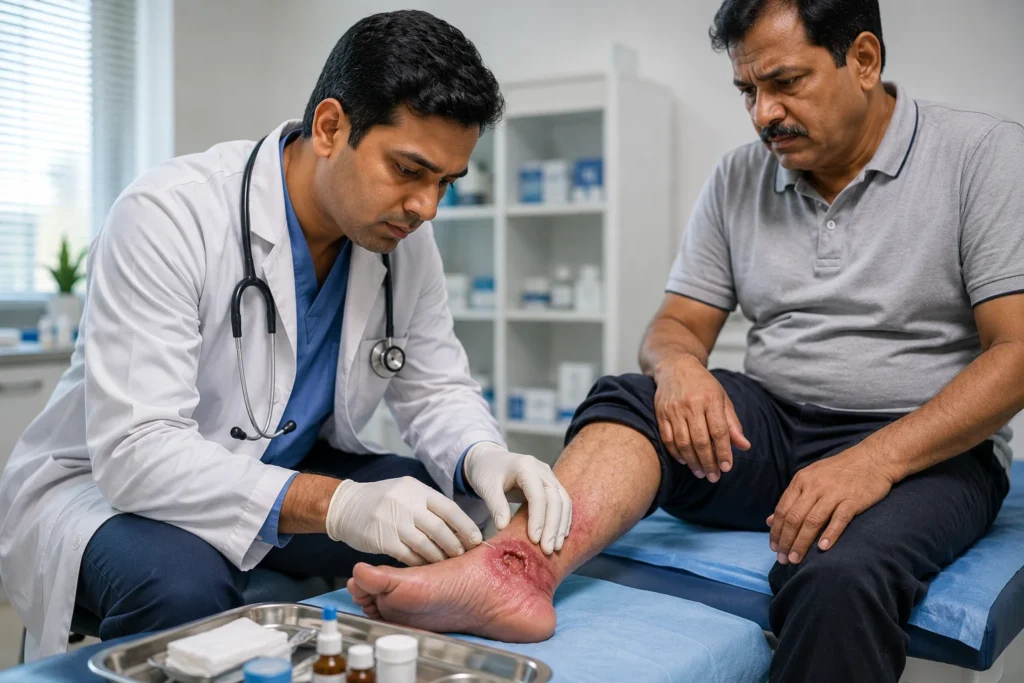
Simple Explanation of Severe Infection
What is a Severe Infection?
A Severe Infection happens when harmful bacteria, viruses, or fungi spread in the body and cause serious inflammation or tissue damage.
Some infections stay mild, while others become severe and require emergency medical care.
Common Areas Affected by Severe Infection:
- Skin and soft tissue
- Lungs
- Urinary tract
- Bloodstream
- Wounds or ulcers
Warning Signs of Severe Infection
Recognizing symptoms early can help prevent complications from a Severe Infection.
Common Warning Signs:
- High fever or chills
- Severe pain or swelling
- Redness spreading around a wound
- Pus or foul-smelling discharge
- Extreme tiredness or weakness
- Fast heartbeat
- Difficulty breathing
Emergency Warning Signs:
- Confusion or difficulty staying awake
- Low blood pressure
- Blue lips or fingertips
- Severe dehydration
- Rapid worsening of symptoms
These signs may indicate a Severe Infection that needs immediate medical care.
Poor circulation associated with varicose veins may also increase the risk of slow-healing wounds and infections.
Common Causes of Severe Infection
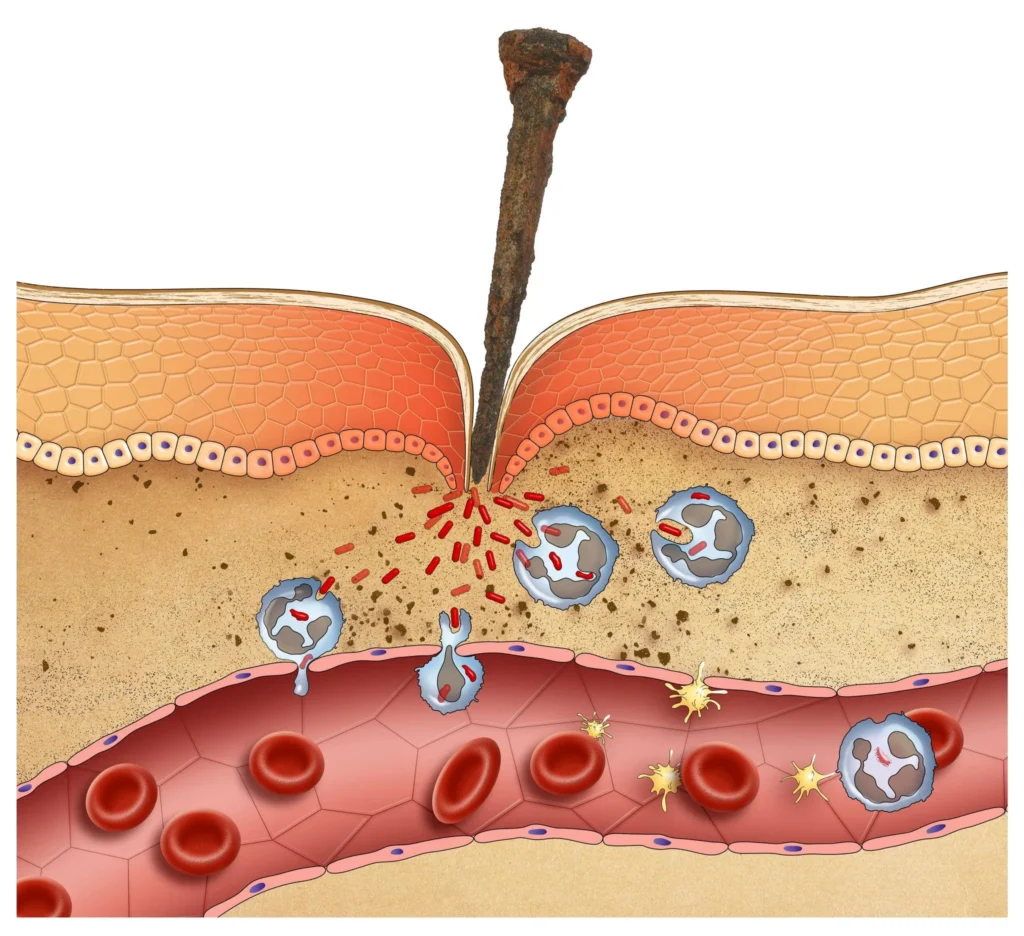
A Severe Infection can develop from many different conditions
Common Causes Include:
- Untreated wounds or cuts
- Diabetic foot ulcers
- Skin infections like cellulitis
- Poor circulation related to varicose veins
- Infected burns or injuries
- Weak immune system
- Delayed treatment of infections
Early treatment of infections can help prevent a Severe Infection.
Treatment for Severe Infection
Treatment depends on the type and seriousness of the Severe Infection
Common Treatment Options:
- Antibiotics or antiviral medicines
- IV fluids to prevent dehydration
- Wound cleaning and dressing
- Oxygen support if breathing is affected
- Hospital care in severe cases
Advanced Treatment May Include:
- Surgery to remove infected tissue
- Intensive care support
- Treatment for complications like gangrene or sepsis
Early treatment greatly improves recovery and reduces complications.
Advanced care may be required for complications caused by diabetic wounds, circulation problems, or spreading infections.
👉 Link:
- diabetic foot ulcer
- cellulitis
- gangrene
- varicose veins
Quick Overview: Severe Infection Warning Signs
| Symptom | Why It Matters |
| High fever | Sign of active infection |
| Swelling or redness | Infection may be spreading |
| Pus discharge | Indicates bacterial infection |
| Difficulty breathing | May require emergency care |
| Confusion | Possible serious complication |
When to Seek Emergency Care for Severe Infection
Seek emergency medical attention immediately if:
- Fever becomes very high
- Infection spreads rapidly
- Breathing becomes difficult
- Wounds turn black or foul-smelling
- Severe weakness or confusion develops
A Severe Infection can worsen quickly, so early medical care is very important
How to Prevent Severe Infection
Prevention plays a major role in reducing the risk of a Severe Infection
Prevention Tips:
- Clean wounds properly
- Manage diabetes carefully
- Treat infections early
- Maintain good hygiene
- Attend regular medical checkups
- Avoid ignoring swelling or redness
FAQs
1. What is a Severe Infection?
A Severe Infection is a serious infection that spreads rapidly and may affect different parts of the body.
2. Can a Severe Infection become life-threatening?
Yes, if untreated, a Severe Infection can lead to serious complications like sepsis.
3. What are the first warning signs?
Fever, swelling, redness, pain, and weakness are common early signs.
4. Who is at higher risk?
People with diabetes, poor circulation, weak immunity, or untreated wounds are at higher risk.